


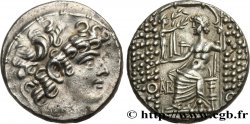
bpv_214963 - SYRIA - ROMAN PROVINCE - AULUS GABINUS Tétradrachme syro-phénicien

non disponibile.
Articolo venduto sul nostro negozio (2014)
Prezzo : 380.00 €
Articolo venduto sul nostro negozio (2014)
Prezzo : 380.00 €
Tipo : Tétradrachme syro-phénicien
Data: 57- 55 AC.
Nome della officina / città: Antioche, Syrie, Séleucie et Piérie
Metallo : argento
Diametro : 26 mm
Asse di coniazione : 12 h.
Peso : 15,44 g.
Commenti sullo stato di conservazione:
Bon centrage, bonne frappe, beaux coins et style, petit plat sur les pieds de Zeus
N° nelle opere di riferimento :
Pedigree :
Cet exemplaire est le 0001_018 de la base TSP et il provient de la Collection McAlee
Diritto
Titolatura diritto : ANÉPIGRAPHE.
Descrittivo diritto : Tête diadémée de Philippe Philadelphe à droite, entourée de la stemma (O’).
Rovescio
Descrittivo rovescio : Zeus assis à gauche sur un trône avec dossier, tenant de la main droite une Niké qui le couronne et un sceptre long de la main gauche ; au-dessus de Zeus, le foudre ; monogramme dans le champ à gauche ; date à l’exergue.
Legenda rovescio : BASILEWS/ FILIPPOU/ EPIFANOUS/ FILADELFOU, (Basilews Filippou Epifanous Filadelfou)
Traduzione rovescio : (Roi Philippe Epiphane Philadelphe/ monogramme d’Antioche).
Commento
Première frappe romaine en argent dans la région, commence la série des tétradrachmes au type de Philippe Philadelphe.
On attribue cette frappe à partir du monogramme du revers qui se lit AVB pour Aulus Gabinius. Général et homme politique, voir l’article de wikipedia le concernant à http://fr.wikipedia.org/wiki/Aulus_Gabinius , il assurera le pouvoir romain dans la région.
Avec cette monnaie, c’est une ère nouvelle qui commence et qui clôt pour le Proche-Orient le chapitre ouvert par les conquêtes d’Alexandre.
Les émissions au type immobilisé de Philippe Philadelphe sont très importantes car elles illustrent parfaitement la logique impériale de la colonisation romaine. Autant une conquête de revendication territoriale d'expansion de l'espace vital autour d'un pouvoir central de type national va chercher à éliminer toutes les symboliques locales dans les pays conquis pour imposer celles du conquérant (selon le principe de un peuple, un roi, une foi, une loi), autant un empire va laisser cohabiter des symboliques différentes. C'est ce qui se passe en Syrie, Palestine et Phénicie dans les premiers temps de l'expansion. Loin d'imposer le denier ou la typologie romaine, les Latins vont respecter la métrologie et même le type. Il faudra attendre les rares émissions d'Auguste au revers du Zeus, presque cinquante ans, pour voir apparaître le portrait du Prince sur les monnaies locales en argent.
Style classique pour l’émission avec les mèches traitées en “serpents”. On remarquera le style du plissé de l’himation de Zeus que nous retrouverons exactement dans la première émission au portrait d’Auguste.
Dans la base TSP maintenue par Michel Prieur, soixante dix-neuf exemplaires sont maintenant répertoriés.
First Roman silver strike in the region, begins the series of tetradrachms of the type of Philip Philadelphus.
This strike is attributed from the monogram on the reverse which reads AVB for Aulus Gabinius. General and politician, see the Wikipedia article about him at http://fr. Wikipedia. org/wiki/Aulus_Gabinius, he will ensure Roman power in the region.
With this coin, a new era begins and closes for the Near East the chapter opened by the conquests of Alexander..
The immobilized type emissions of Philippe Philadelphe are very important because they perfectly illustrate the imperial logic of Roman colonization.. Just as a conquest of territorial claim of expansion of the living space around a central power of national type will seek to eliminate all local symbols in the conquered countries to impose those of the conqueror (according to the principle of one people, one king, one faith, one law), so an empire will allow different symbols to coexist. This is what happened in Syria, Palestine and Phoenicia in the early days of expansion.. Far from imposing the denarius or Roman typology, the Latins will respect metrology and even the type. It was not until the rare issues of Augustus on the reverse of the Zeus, almost fifty years later, that the portrait of the Prince appeared on local silver coins..
Classic style for the show with the strands treated in “snakes”. We will notice the style of the pleating of the himation of Zeus that we will find exactly in the first emission with the portrait of Augustus.
In the TSP database maintained by Michel Prieur, seventy-nine examples are now listed.
On attribue cette frappe à partir du monogramme du revers qui se lit AVB pour Aulus Gabinius. Général et homme politique, voir l’article de wikipedia le concernant à http://fr.wikipedia.org/wiki/Aulus_Gabinius , il assurera le pouvoir romain dans la région.
Avec cette monnaie, c’est une ère nouvelle qui commence et qui clôt pour le Proche-Orient le chapitre ouvert par les conquêtes d’Alexandre.
Les émissions au type immobilisé de Philippe Philadelphe sont très importantes car elles illustrent parfaitement la logique impériale de la colonisation romaine. Autant une conquête de revendication territoriale d'expansion de l'espace vital autour d'un pouvoir central de type national va chercher à éliminer toutes les symboliques locales dans les pays conquis pour imposer celles du conquérant (selon le principe de un peuple, un roi, une foi, une loi), autant un empire va laisser cohabiter des symboliques différentes. C'est ce qui se passe en Syrie, Palestine et Phénicie dans les premiers temps de l'expansion. Loin d'imposer le denier ou la typologie romaine, les Latins vont respecter la métrologie et même le type. Il faudra attendre les rares émissions d'Auguste au revers du Zeus, presque cinquante ans, pour voir apparaître le portrait du Prince sur les monnaies locales en argent.
Style classique pour l’émission avec les mèches traitées en “serpents”. On remarquera le style du plissé de l’himation de Zeus que nous retrouverons exactement dans la première émission au portrait d’Auguste.
Dans la base TSP maintenue par Michel Prieur, soixante dix-neuf exemplaires sont maintenant répertoriés.
First Roman silver strike in the region, begins the series of tetradrachms of the type of Philip Philadelphus.
This strike is attributed from the monogram on the reverse which reads AVB for Aulus Gabinius. General and politician, see the Wikipedia article about him at http://fr. Wikipedia. org/wiki/Aulus_Gabinius, he will ensure Roman power in the region.
With this coin, a new era begins and closes for the Near East the chapter opened by the conquests of Alexander..
The immobilized type emissions of Philippe Philadelphe are very important because they perfectly illustrate the imperial logic of Roman colonization.. Just as a conquest of territorial claim of expansion of the living space around a central power of national type will seek to eliminate all local symbols in the conquered countries to impose those of the conqueror (according to the principle of one people, one king, one faith, one law), so an empire will allow different symbols to coexist. This is what happened in Syria, Palestine and Phoenicia in the early days of expansion.. Far from imposing the denarius or Roman typology, the Latins will respect metrology and even the type. It was not until the rare issues of Augustus on the reverse of the Zeus, almost fifty years later, that the portrait of the Prince appeared on local silver coins..
Classic style for the show with the strands treated in “snakes”. We will notice the style of the pleating of the himation of Zeus that we will find exactly in the first emission with the portrait of Augustus.
In the TSP database maintained by Michel Prieur, seventy-nine examples are now listed.
Cronistoria
SYRIA - ROMAN PROVINCE - AULUS GABINUS
(57-55 a.C.)
Conio a nome di Philippe Philadelphe, re seleucide
Aulo Gabino iniziò la sua carriera sotto Silla combattendo contro Mitridate VI del Ponto. Amico di Pompeo, divenne tribuno della plebe nel 67 aC Partecipò alla lotta contro i pirati che infestavano il Mediterraneo in Cilicia e Creta e si unì a Pompeo. Fu pretore nel 61 e console nel 58 aC L'anno successivo ricevette come proconsolato la provincia di Siria con "imperium infinitum". Riorganizzò anche la provincia della Giudea e fu proclamato "Imperator". Nel 55 a.C. riportò sul trono d'Egitto Tolomeo XII Aulete. Accusato del reato di "maiestas", andò in esilio. Fu ucciso nel 48 aC a Salona (Illiria) combattendo nell'accampamento di Cesare.
 Segnalare un errore
 Stampate la pagina
 Condividi mia selezione
 Fai una domanda
 Consegnare / vendere
Articoli correlati

 Descrittivo

cgbfr.it numismatica


