


Live auction - fjt_1117819 - HENRY IV LE TRAITÉ DE VERVINS 1599

Devi Sign-in ed essere un offerente approvato fare un'offerta, Login per fare offerte. Conti sono soggetti ad approvazione e di approvazione sono raggiunti entro 48 ore. Non aspettare fino al giorno di una vendita si chiude per registrarti.Confermando la tua offerta su questo oggetto ti impegni ad un contratto legalmente vincolante per l'acquisto di questo prodotto e fare clic su «offerta» costituisce accettazione dei termini di utilizzo de live auctions cgb.fr.
Offerta deve essere collocato in euro gli importi interi vendita only.The si chiuderà al momento sulla descrizione dell'oggetto, eventuali offerte pervenute al sito dopo l'orario di chiusura non verranno eseguite. Volte transmition possono variare e le offerte potrebbero essere respinto se si attende per gli ultimi secondi. Per ulteriori informazioni ckeck le FAQ Live auction.
Le offerte vincenti saranno sottomesse ai 18% per spese di compartecipazione alla vendita.
Le offerte vincenti saranno sottomesse ai 18% per spese di compartecipazione alla vendita.
 Data di Live
 Tipo : LE TRAITÉ DE VERVINS
Data: 1599
Metallo : argento
Diametro : 27,5 mm
Asse di coniazione : 6 h.
Peso : 5,56 g.
Orlo : lisse
Grado di rarità : R3
Commenti sullo stato di conservazione:
Aspect nettoyé. Usure régulière. Présence de coups et rayures
N° nelle opere di riferimento :
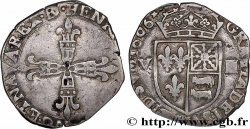
Diritto
Titolatura diritto : HENRICVS. IIII. FRANC-ORVM. ET. NAVARÆ. REX.
Descrittivo diritto : Écus accotés de France et de Navarre sous une large couronne, entourés des colliers de l’ordre de Saint-Michel et du Saint-Esprit.
Traduzione diritto : (Henri IV, roi des Francs et de Navarre).
Rovescio
Titolatura rovescio : PAX. MARTIS. OPVS.
Descrittivo rovescio : Mars debout à gauche, arrosant un olivier, la main gauche sur sa haste ; à l'exergue .1599..
Traduzione rovescio : (La paix est l'œuvre de Mars).
Commento
Jacques De Bie dans son “Histoire métallique de la France”, Paris, 1636, donne l’explication du revers de ce jeton : “Le corps est d’une figure en pied armée à l’antique, représentant un Mars, qui avec un vase remply d’eau arrouse un olivier parroissant desia demy sec : Il tient en sa gauche, une demy-picque dressée au-long de sa hanche qui luy sert d’appuy au bras. Sous l’exergue : MDXCIX. marque assez precise, pour insinuer dans la mémoire de la postérité les utilitéz qu’apporta la paix entre deux monarques les premiers de la chrestienté”. De Bie fait allusion ici au traité de Vervins signé en 1598.
Jacques De Bie in his “Histoire métallique de la France”, Paris, 1636, gives the explanation of the reverse of this token: “The body is a full-length figure armed in the antique style, representing a Mars, who with a vase filled with water waters an olive tree appearing half-dry: He holds in his left, a half-spike raised along his hip which serves as a support for his arm. Under the exergue: MDXCIX. a fairly precise mark, to insinuate in the memory of posterity the usefulness that peace brought between two monarchs, the first of Christianity”. De Bie is alluding here to the Treaty of Vervins signed in 1598
Jacques De Bie in his “Histoire métallique de la France”, Paris, 1636, gives the explanation of the reverse of this token: “The body is a full-length figure armed in the antique style, representing a Mars, who with a vase filled with water waters an olive tree appearing half-dry: He holds in his left, a half-spike raised along his hip which serves as a support for his arm. Under the exergue: MDXCIX. a fairly precise mark, to insinuate in the memory of posterity the usefulness that peace brought between two monarchs, the first of Christianity”. De Bie is alluding here to the Treaty of Vervins signed in 1598
Cronistoria
HENRY IV
(02/08/1589-14/05/1610)
Re dopo la tragica morte di Enrico III, Enrico di Borbone, re di Navarra, discendente dell'ultimo figlio di San Luigi, Roberto di Clermont. Con lui inizia la dinastia dei Borbone che regnò sulla Francia fino alla Rivoluzione, si estinse in linea diretta in Francia con il conte di Chambord ed esiste tuttora, in Francia, nel suo ramo minore di Orléans e, fuori dalla Francia, nel suo ramo maggiore, con le case di Spagna, Parma e Sicilia. Con la dichiarazione del 4 agosto 1589, Enrico IV promise il mantenimento della religione cattolica e la riunione di un consiglio nazionale. Era tempo di guerra civile. Il duca di Mayenne fece proclamare re il cardinale di Borbone, allora prigioniero di Enrico IV, con il nome di Carlo X.. Il re marciò sulla Normandia e sconfisse Mayenne vicino al castello d'Arques (21 settembre 1589), ma non riuscì a prendere Parigi. A Tours fu insediato un parlamento lealista, presieduto da Achille de Harlay. Dopo aver riconquistato tutta la Normandia, ad eccezione di Rouen, Henri pose l'assedio a Dreux (febbraio 1590). Con i rinforzi del duca di Parma, Mayenne gli andò contro e lo incontrò a Ivry (marzo 1590). Ancora una volta, i leghisti furono sconfitti. Il blocco di Parigi, difeso dal duca di Mercœur, iniziò nel maggio 1590. Mayenne e il duca di Parma apparvero alla fine dell'estate, Henri circondò la città con una rete di città fedeli e attese il suo tempo. Con l'Editto di Mantes (luglio 1591), restaurò il regime dell'Editto di Poitiers. Alla morte di Carlo X (1590), gli spagnoli avanzarono i diritti dell'Infanta Claire-Isabelle-Eugénie, figlia di Filippo II ed Elisabetta di Valois. Una guarnigione spagnola si stabilì a Parigi. Il duca di Savoia entrò in Provenza, gli spagnoli in Linguadoca. Nel dicembre 1592, Mayenne convocò gli Stati Generali a Parigi. Si aprirono nel gennaio 1593 e presentarono diverse richieste: un re cattolico, periodicità degli Stati, ripristino delle libertà provinciali, ricezione del Concilio di Trento in Francia, ma rifiutarono la candidatura dell'Infanta. Una tregua generale fu firmata nel luglio 1593; lo stesso mese, a Saint-Denis, Enrico IV abiura il protestantesimo. La Lega presto si disintegrò e il re fu incoronato a Chartres nel febbraio 1594. Entrò a Parigi nel marzo successivo. Non c'era alcuna forma di repressione. La Piccardia e il duca di Guisa si sottomisero a turno e Clemente VIII diede la sua assoluzione a Enrico nel settembre 1596. La guerra contro la Spagna iniziò ufficialmente nel gennaio 1595. Sconfitti a Fontaine-Française (giugno 1595), gli spagnoli dovettero evacuare la Borgogna e furono inseguiti fino alla Franca Contea. Mayenne si è presentata in ottobre, seguita da Joyeuse ed Épernon. In Bretagna, Mercœur continuò una guerra partigiana fino al 1598. Le operazioni contro gli spagnoli furono poco favorevoli ai francesi nel 1596 e nel 1597. Il trattato di pace fu firmato dalle due monarchie esauste nel maggio 1598: questo trattato di Vervins tornò alle clausole del trattato di Cateau-Cambrésis. Con l'editto di Nantes (aprile 1598), dichiarato perpetuo e irrevocabile, la libertà di coscienza fu concessa ovunque ai protestanti; la libertà di culto è rimasta dove esisteva ed è stata stabilita presso la Corte. Furono istituite "camere dell'editto" a metà partito per risolvere le controversie tra cattolici e protestanti. La festa ha ricevuto un centinaio di luoghi di sicurezza, tra cui Montpellier, Montauban e La Rochelle. Tornata la pace, la situazione del regno non fu meno disastrosa. Enrico IV mostrò le più grandi qualità di uno statista: dimenticando il passato, si circondò di ardenti cattolici, come Villeroy e il presidente Jeannin, allo stesso tempo di ferventi ugonotti come Sully, sovrintendente delle finanze nel 1601. Abilmente, ha gradualmente ridotto il potere dei governatori e dei parlamenti. Nel 1600 sposò Maria de' Medici, che gli diede un delfino nel 1601. Nel 1602 fece giustiziare il maresciallo Biron, governatore della Borgogna, per aver cospirato per sollevare i cattolici. Nel 1606 marciò contro Sedan, capitale del duca di Bouillon, fuggito dal regno, e ne ottenne la sottomissione. L'ostilità persisteva tra la Francia e gli Asburgo. Nel 1601, con il trattato di Lione, il duca di Savoia cedette Bresse, Bugey, Pays de Gex e Valromey al re di Francia.. In Italia, invece, l'influenza francese rimase nulla.. La Francia ha sostenuto segretamente le Province Unite. Dalla parte dell'Impero, Henri stava per intervenire nella successione di Cleves e Juliers quando fu assassinato da Ravaillac, il 14 maggio 1610.
 Segnalare un errore
 Stampate la pagina
 Condividi mia selezione
 Fai una domanda
 Consegnare / vendere
Articoli correlati
 Descrittivo


Articoli visualizzati di recente
COSTANZO GALLO Maiorina réduite q.SPL
44.00 €
COSTANTINO II Centenionalis ou nummus SPL
20.00 €
GORDIANO III Denier q.SPL
55.00 €
TETRICO I Antoninien, imitation q.BB
4.00 €
GRAZIANO Maiorina pecunia, (MB, Æ 2) BB
12.00 €

HENRY IV LE TRAITÉ DE VERVINS BB
150.00 €
cgbfr.it numismatica


