


fme_1083258 - ALLEMAGNE - ROYAUME DE PRUSSE - FRÉDÉRIC II LE GRAND Médaille, Bataille de Prague

100.00 €
Quantità
Aggiungi al carrello

Tipo : Médaille, Bataille de Prague
Data: 1757
Nome della officina / città: Allemagne
Metallo : bronzo
Diametro : 48 mm
Asse di coniazione : 12 h.
Incisore HOLTZHEY Johann Georg (1729-1808)
Peso : 40,20 g.
Orlo : Lisse
Marchio : sans poinçon
Commenti sullo stato di conservazione:
Belle médaille en bronze malheureusement percée à 12 heures. Présence de quelques coups et rayures
Diritto
Titolatura diritto : FRIDERICVS MAGN. D. G. REX BORVSS. FL. BRAND. DVX SILES ET.
Descrittivo diritto : Buste cuirassé de Frédéric II de Prusse à droite.
Rovescio
Titolatura rovescio : FAMA. PRVDENTIA ET VIRTVTE, (LÉGENDE CIRCULAIRE) // AVSTIR. EXERC. PROPE. PRAG. EVNDIT / CÆSO ET PRAGA OBSESSA / VI MAJI MDCCLVII., (À L’EXERGUE).
Descrittivo rovescio : Personnification de la Victoire ailée au centre, tenant la foudre, donnant un coup de pied dans la couronne de l’impératrice autrichienne Maria Theresia agenouillée ; bouclier iinscrit «VICTORIA FRIDERI / CI MAGN.” ; ALBISIL et MOLDA inscrit sur deux cruches, canon et armure en trophée.
Commento
Médaille attribuée au graveur hollandais Johann Georg Holtzhey (1729-1808).
Lors de la guerre de Sept Ans, la bataille de Prague voit, le 6 mai 1757, la victoire des Prussiens commandés par Frédéric II sur les Autrichiens de Charles-Alexandre de Lorraine. Le général autrichien Maximilian Ulysses Browne y est mortellement blessé, de même que le feld-maréchal prussien Curt Christophe de Schwerin. Cette victoire prussienne est suivie par le siège de Prague (mai-juin 1757) (en) mais Frédéric II, battu à la bataille de Kolin le 18 juin, doit se retirer et ne peut s'emparer de Prague.
Frédéric II de Prusse, dit Frédéric le Grand (en allemand, Friedrich der Große), né le 24 janvier 1712 à Berlin, mort le 17 août 1786 à Potsdam, de la maison de Hohenzollern, est roi de Prusse de 1740 à 1786, le premier à porter officiellement ce titre1. Il est simultanément le 14e prince-électeur de Brandebourg. Il est parfois surnommé affectueusement der alte Fritz (le vieux Fritz). Agrandissant notablement le territoire de ses États aux dépens de l'Autriche (Silésie, 1742) et de la Pologne (Prusse-Occidentale, 1772), il fait entrer son pays dans le cercle des grandes puissances européennes. Ami de Voltaire, il est l'un des principaux représentants du courant du «despotisme éclairé»..
Medal attributed to the Dutch engraver Johann Georg Holtzhey (1729-1808).
During the Seven Years' War, the Battle of Prague saw, on May 6, 1757, the victory of the Prussians commanded by Frederick II over the Austrians of Charles-Alexander of Lorraine.. Austrian General Maximilian Ulysses Browne was mortally wounded there, as was Prussian Field Marshal Curt Christophe of Schwerin.. This Prussian victory was followed by the siege of Prague (May-June 1757) but Frederick II, defeated at the Battle of Kolin on June 18, had to withdraw and could not capture Prague..
Frederick II of Prussia, known as Frederick the Great (in German, Friedrich der Große), born on January 24, 1712 in Berlin, died on August 17, 1786 in Potsdam, of the House of Hohenzollern, was King of Prussia from 1740 to 1786, the first to officially bear this title1. He was simultaneously the 14th Prince-Elector of Brandenburg.. He is sometimes affectionately known as der alte Fritz (old Fritz). Significantly expanding the territory of his states at the expense of Austria (Silesia, 1742) and Poland (West Prussia, 1772), he brought his country into the circle of the great European powers.. A friend of Voltaire, he is one of the main representatives of the \\\"enlightened despotism\\\" movement..
Lors de la guerre de Sept Ans, la bataille de Prague voit, le 6 mai 1757, la victoire des Prussiens commandés par Frédéric II sur les Autrichiens de Charles-Alexandre de Lorraine. Le général autrichien Maximilian Ulysses Browne y est mortellement blessé, de même que le feld-maréchal prussien Curt Christophe de Schwerin. Cette victoire prussienne est suivie par le siège de Prague (mai-juin 1757) (en) mais Frédéric II, battu à la bataille de Kolin le 18 juin, doit se retirer et ne peut s'emparer de Prague.
Frédéric II de Prusse, dit Frédéric le Grand (en allemand, Friedrich der Große), né le 24 janvier 1712 à Berlin, mort le 17 août 1786 à Potsdam, de la maison de Hohenzollern, est roi de Prusse de 1740 à 1786, le premier à porter officiellement ce titre1. Il est simultanément le 14e prince-électeur de Brandebourg. Il est parfois surnommé affectueusement der alte Fritz (le vieux Fritz). Agrandissant notablement le territoire de ses États aux dépens de l'Autriche (Silésie, 1742) et de la Pologne (Prusse-Occidentale, 1772), il fait entrer son pays dans le cercle des grandes puissances européennes. Ami de Voltaire, il est l'un des principaux représentants du courant du «despotisme éclairé»..
Medal attributed to the Dutch engraver Johann Georg Holtzhey (1729-1808).
During the Seven Years' War, the Battle of Prague saw, on May 6, 1757, the victory of the Prussians commanded by Frederick II over the Austrians of Charles-Alexander of Lorraine.. Austrian General Maximilian Ulysses Browne was mortally wounded there, as was Prussian Field Marshal Curt Christophe of Schwerin.. This Prussian victory was followed by the siege of Prague (May-June 1757) but Frederick II, defeated at the Battle of Kolin on June 18, had to withdraw and could not capture Prague..
Frederick II of Prussia, known as Frederick the Great (in German, Friedrich der Große), born on January 24, 1712 in Berlin, died on August 17, 1786 in Potsdam, of the House of Hohenzollern, was King of Prussia from 1740 to 1786, the first to officially bear this title1. He was simultaneously the 14th Prince-Elector of Brandenburg.. He is sometimes affectionately known as der alte Fritz (old Fritz). Significantly expanding the territory of his states at the expense of Austria (Silesia, 1742) and Poland (West Prussia, 1772), he brought his country into the circle of the great European powers.. A friend of Voltaire, he is one of the main representatives of the \\\"enlightened despotism\\\" movement..
Cronistoria
ALLEMAGNE - ROYAUME DE PRUSSE - FRÉDÉRIC II LE GRAND
(1740-17/08/1786)
Frederic nasce a Berlino il 24 gennaio 1712 ed è figlio di Federico Guglielmo I. Fu dapprima alleata della Francia nella guerra di successione austriaca (1740-1748) poi ci fu un'inversione di alleanza durante la guerra dei sette anni (1756-1763). Fu uno dei grandi vincitori del Trattato di Parigi (1763) e prese parte al primo smembramento della Polonia (1772). Federico II (1712-1786) fu il più grande re di Prussia. Amico di Voltaire, scrive in francese ed è il modello del despota illuminato della seconda metà del Settecento. Succedette a suo padre Frédéric-Guillaume, re Sergent e fece di Berlino una vera capitale e del castello di Sans Souci a Potsdam una piccola Versailles. Grazie a una politica bellicosa, fece della Prussia lo stato più potente dell'Europa orientale e controbilanciava l'influenza di Austria e Russia. Morì nel castello di Sans-Souci (Potsdam), il 17 agosto 1786.
 Segnalare un errore
 Stampate la pagina
 Condividi mia selezione
 Fai una domanda
 Consegnare / vendere
Articoli correlati

 Descrittivo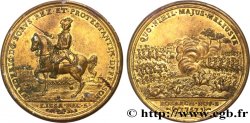


Articoli visualizzati di recente

TRACIA - CHERSONESO DI TRACIA - CARDIA Hemidrachme ou tetrobole q.SPL
260.00 €

NUOVA CALEDONIA 20 Francs I.E.O.M. Marianne / zébus d’élevage de Nouvelle Ca
3.00 €

ALLEMAGNE - ROYAUME DE PRUSSE - FRÉDÉRIC II LE GRAND Médaille, Bataille de Pr
100.00 €

UNGHERIA - REGNO D'UNGHERIA - LEOPOLDO I 15 Kreuzer 1682 Kremnitz q.BB
70.00 €
VATICANO E STATO PONTIFICIO 500 Lire Jean-Paul II année sainte 1984 Rome MS
40.00 €
REGNO DI LOMBARDIA-VENETO - FRANCESCO GIUSEPPE I Scudo 1853 Venise q.BB
310.00 €
cgbfr.it numismatica


