


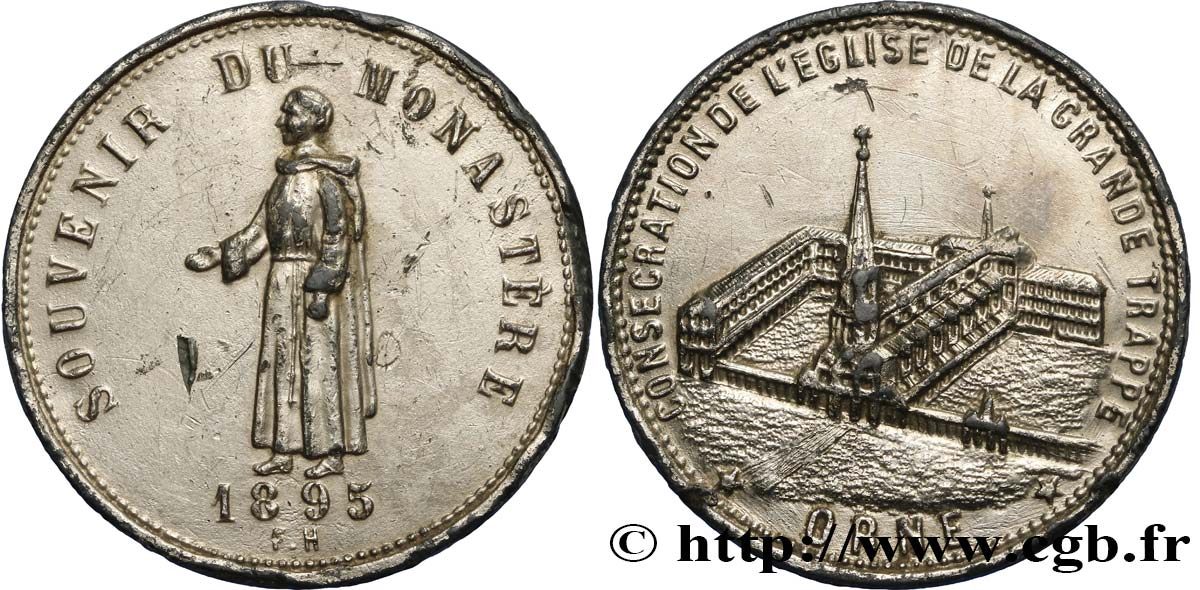
E-auction 327-243506 - fme_441823 - TERZA REPUBBLICA FRANCESE Médaille, Souvenir du monastère
Devi Sign-in ed essere un offerente approvato fare un'offerta, Login per fare offerte. Conti sono soggetti ad approvazione e di approvazione sono raggiunti entro 48 ore. Non aspettare fino al giorno di una vendita si chiude per registrarti.Confermando la tua offerta su questo oggetto ti impegni ad un contratto legalmente vincolante per l'acquisto di questo prodotto e fare clic su «offerta» costituisce accettazione dei termini di utilizzo de e-auctions cgb.fr.
Offerta deve essere collocato in euro gli importi interi vendita only.The si chiuderà al momento sulla descrizione dell'oggetto, eventuali offerte pervenute al sito dopo l'orario di chiusura non verranno eseguite. Volte transmition possono variare e le offerte potrebbero essere respinto se si attende per gli ultimi secondi. Per ulteriori informazioni ckeck le FAQ.
SENZA COSTI PER GLI ACQUIRENTI.
SENZA COSTI PER GLI ACQUIRENTI.
| Valutazione : | 60 € |
| Prezzo : | 13 € |
| Offerta maxima : | 13 € |
| Data di fine vendita : | 22 luglio 2019 18:09:30 |
| partecipanti : | 5 partecipanti |
Tipo : Médaille, Souvenir du monastère
Data: 1895
Nome della officina / città: 61 - Orne
Metallo : stagno
Diametro : 38 mm
Asse di coniazione : 12 h.
Incisore F.H.
Peso : 18,58 g.
Orlo : lisse
Commenti sullo stato di conservazione:
Coups et rayures dans les champs. Traces de nettoyage
Diritto
Titolatura diritto : SOUVENIR DU MONASTERE / 1895.
Descrittivo diritto : Moine debout à gauche faisant l’aumône.
Rovescio
Titolatura rovescio : CONSÉCRATION DE L’ÉGLISE DE LA GRANDE TRAPPE.
Descrittivo rovescio : Vue du monastère de la Grande Trappe.
Commento
L'abbaye Notre-Dame de la Trappe (appelée jusqu'au début du XXe siècle la Grande-Trappe) est un monastère en activité, situé à Soligny-la-Trappe (Orne, France). Né au XIe siècle dans l'éphémère congrégation de Savigny, il rejoint comme son abbaye-mère l'ordre cistercien en 1147.
Alors que l'abbaye de la Trappe est confrontée, comme la plupart des établissements monastiques en général et cisterciens en particulier, à une baisse de la ferveur monastique aux XVIe et XVIIe siècles, elle est refondée suivant une lecture plus stricte de la règle en 1660. Cette réforme, initiée par l'abbé Armand Jean Le Bouthillier de Rancé, est dite originellement « de l'étroite observance », puis « de la stricte observance », mais plus communément appelée « trappiste » en hommage à l'abbaye qui lui a donné naissance.
Fermée comme tous les autres établissements monastiques à la Révolution française, la Trappe voit partir en exil l'abbé Augustin de Lestrange avec quelques moines ; ce sont eux qui, revenant en 1814, fondent à nouveau l'ordre cistercien de la stricte observance à la Trappe, d'où il rayonne dans le monde entier. En 1898, avec la restauration de Cîteaux, abbaye originelle de l'ordre cistercien, l'abbaye de la Trappe cesse d'être la tête de l'ordre auquel elle a donné son nom..
The Abbey of Notre-Dame de la Trappe (called until the beginning of the 20th century the Grande-Trappe) is a working monastery, located in Soligny-la-Trappe (Orne, France). Born in the 11th century in the short-lived congregation of Savigny, it joined the Cistercian order like its mother abbey in 1147..
While the Abbey of La Trappe was faced, like most monastic establishments in general and Cistercian ones in particular, with a decline in monastic fervor in the 16th and 17th centuries, it was refounded following a stricter reading of the rule in 1660.. This reform, initiated by Abbot Armand Jean Le Bouthillier de Rancé, was originally called \\\"of the narrow observance\\\", then \\\"of the strict observance\\\", but more commonly called \\\"Trappist\\\" in homage to the abbey which gave birth to it..
Closed like all other monastic establishments during the French Revolution, La Trappe saw Abbot Augustin de Lestrange leave for exile with a few monks; it was they who, returning in 1814, refounded the Cistercian order of strict observance at La Trappe, from where it spread throughout the world.. In 1898, with the restoration of Cîteaux, the original abbey of the Cistercian order, the Trappe Abbey ceased to be the head of the order to which it gave its name..
Alors que l'abbaye de la Trappe est confrontée, comme la plupart des établissements monastiques en général et cisterciens en particulier, à une baisse de la ferveur monastique aux XVIe et XVIIe siècles, elle est refondée suivant une lecture plus stricte de la règle en 1660. Cette réforme, initiée par l'abbé Armand Jean Le Bouthillier de Rancé, est dite originellement « de l'étroite observance », puis « de la stricte observance », mais plus communément appelée « trappiste » en hommage à l'abbaye qui lui a donné naissance.
Fermée comme tous les autres établissements monastiques à la Révolution française, la Trappe voit partir en exil l'abbé Augustin de Lestrange avec quelques moines ; ce sont eux qui, revenant en 1814, fondent à nouveau l'ordre cistercien de la stricte observance à la Trappe, d'où il rayonne dans le monde entier. En 1898, avec la restauration de Cîteaux, abbaye originelle de l'ordre cistercien, l'abbaye de la Trappe cesse d'être la tête de l'ordre auquel elle a donné son nom..
The Abbey of Notre-Dame de la Trappe (called until the beginning of the 20th century the Grande-Trappe) is a working monastery, located in Soligny-la-Trappe (Orne, France). Born in the 11th century in the short-lived congregation of Savigny, it joined the Cistercian order like its mother abbey in 1147..
While the Abbey of La Trappe was faced, like most monastic establishments in general and Cistercian ones in particular, with a decline in monastic fervor in the 16th and 17th centuries, it was refounded following a stricter reading of the rule in 1660.. This reform, initiated by Abbot Armand Jean Le Bouthillier de Rancé, was originally called \\\"of the narrow observance\\\", then \\\"of the strict observance\\\", but more commonly called \\\"Trappist\\\" in homage to the abbey which gave birth to it..
Closed like all other monastic establishments during the French Revolution, La Trappe saw Abbot Augustin de Lestrange leave for exile with a few monks; it was they who, returning in 1814, refounded the Cistercian order of strict observance at La Trappe, from where it spread throughout the world.. In 1898, with the restoration of Cîteaux, the original abbey of the Cistercian order, the Trappe Abbey ceased to be the head of the order to which it gave its name..
Cronistoria
TERZA REPUBBLICA FRANCESE
(4/09/1870-10/07/1940)
La notizia della capitolazione di Sedan provoca la rivoluzione del 4 settembre 1870 a Parigi. Proclamata all'Hôtel de Ville, la Repubblica è dotata di un governo provvisorio chiamato Governo di Difesa Nazionale. Minacciato a sinistra dall'insurrezione del Comune ea destra dai monarchici, il nuovo regime ebbe un inizio difficile.. Inizialmente capo del potere esecutivo (febbraio 1871), Thiers si occupò di riorganizzare il paese prima di scegliere la sua forma di governo.. Divenne presidente della Repubblica nell'agosto 1871 e, nonostante la sua azione per liberare il territorio, dovette lasciare il suo incarico nel marzo 1873 di fronte all'opposizione monarchica.. Viene poi sostituito da Mac-Mahon favorevole alla restaurazione della monarchia ma questo non viene ripristinato in seguito alla questione della bandiera. La legge del settennato fu poi varata nel novembre 1873 e poi, nel 1875, furono approvate le leggi fondamentali che servirono da Costituzione della Terza Repubblica.. Sistema parlamentare, si caratterizza in particolare per la netta preponderanza del potere legislativo su quello esecutivo. Anticlericale, la Terza Repubblica rende la scuola gratuita, laica e obbligatoria ma continua la politica coloniale per le sue ambizioni economiche, strategiche e morali. La separazione tra Chiesa e Stato fu approvata nel 1905.. L'idea di vendetta sulla Germania e il nazionalismo significativo sono al centro della crisi boulangista, dello scandalo di Panama o dell'affare Dreyfus degli anni 1886-1899, mentre la politica estera è molto attiva, in particolare in Marocco e che si sviluppa la corsa agli armamenti. La prima guerra mondiale fu costosa per la Francia, che si riprese solo dal 1920 o addirittura dal 1928 per la moneta con il franco "Poincaré".. La crisi del 1929 si fa sentire solo dal 1932 ma dura fino al 1939, periodo durante il quale l'instabilità ministeriale è molto importante. Vacillando nel 1934, la Terza Repubblica trovò un nuovo cemento unitario con l'antifascismo che permise al Fronte Popolare di salire al potere nel 1936.. Ma, paralizzata contro la Germania, la Francia fu poi impantanata in una "guerra fasulla" e poi subì una delle più grandi sconfitte della sua storia nel giugno 1940.. Riunite nell'Assemblea nazionale di Vichy il 10 luglio 1940, le Camere, benché elette nel 1936, votarono pieni poteri a Pétain in una sorta di suicidio collettivo con 569 voti favorevoli, 80 contrari e 18 astenuti..
 Segnalare un errore
 Stampate la pagina
 Condividi mia selezione
 Fai una domanda
 Consegnare / vendere
 Descrittivo




Articoli visualizzati di recente

500000 Karbovantsiv UCRAINA 1994 P.099a q.BB
25.00 €

GERMANIA 2 Euro CINQUANTENAIRE DU TRAITÉ DE ROME 2007 MS
4.00 €
PARIS - LOCAL ADMINISTRATION Conseillers de ville BB
65.00 €

ANGLETERRE - ROYAUME D'ANGLETERRE - CHARLES Ier Médaille d’hommage à Charle
68.00 €

SUDAFRICA 1 Penny Georges V 1932 BB
11.00 €

5 Francs ALGERIA 1944 P.094s q.FDC
120.00 €
cgbfr.it numismatica


