


Live auction - bmv_1076134 - TOURS (TVRONVS CIVITAS) Denier

Devi Sign-in ed essere un offerente approvato fare un'offerta, Login per fare offerte. Conti sono soggetti ad approvazione e di approvazione sono raggiunti entro 48 ore. Non aspettare fino al giorno di una vendita si chiude per registrarti.Confermando la tua offerta su questo oggetto ti impegni ad un contratto legalmente vincolante per l'acquisto di questo prodotto e fare clic su «offerta» costituisce accettazione dei termini di utilizzo de live auctions cgb.fr.
Offerta deve essere collocato in euro gli importi interi vendita only.The si chiuderà al momento sulla descrizione dell'oggetto, eventuali offerte pervenute al sito dopo l'orario di chiusura non verranno eseguite. Volte transmition possono variare e le offerte potrebbero essere respinto se si attende per gli ultimi secondi. Per ulteriori informazioni ckeck le FAQ Live auction.
Le offerte vincenti saranno sottomesse ai 18% per spese di compartecipazione alla vendita.
Le offerte vincenti saranno sottomesse ai 18% per spese di compartecipazione alla vendita.
 Data di Live
 Tipo : Denier
Data: fin du VIIIe siècle
Data: s.m.
Nome della officina / città: Marmoutier à Tours (37)
Metallo : argento
Diametro : 11,5 mm
Asse di coniazione : 7 h.
Peso : 1,03 g.
Grado di rarità : R2
Commenti sullo stato di conservazione:
Ce denier est frappé sur un flan assez large et présente de hauts reliefs. Patine grise
N° nelle opere di riferimento :
Diritto
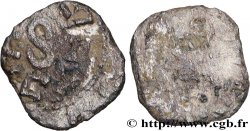
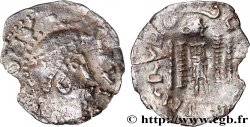
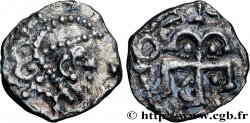
Descrittivo diritto : Monogramme.
Rovescio
Descrittivo rovescio : Croix ancrée.
Commento
Ce denier est proche du Belfort 5671. Cette série est reprise par P. Schiesser dans son récent ouvrage sur le monnayage mérovingiens en argent, RT Sena n° 7, n° 49-51bis. Ce dernier remet en question l’attribution historique à Angers (cf. Monetae 1 pl. 7, p. 70) et met en valeur une “continuité visuelle” avec les deniers de Leugariaco. Depuis, nous avons montré que le monogramme du droit pourrait indiqué le monastère de Marmoutier. En effet, saint Martin se retira dans un ermitage à Marmoutier (actuellement Tours, au nord de la Loire). Un monastère y fut créé sur des ruines antiques. Il est bien attesté chez Grégoire de Tours (539-594) qui parle de “majus monasterium” (grand monastère). Ce monastère était autrefois en périphérie de Tours, d’où l’absence de référence à Tours (TVRONVS), mais la référence à Saint-Martin et au “grand monastère” par le biais du monogramme du droit. On retrouve en effet ce monogramme sur des deniers avec MOI SCI MARTIN (Monastère de saint Martin) et du monétaire Naudegiselo.
This denier is similar to Belfort 5671. This series is discussed by P. Schiesser in his recent work on Merovingian silver coinage, RT Sena no. 7, nos. 49-51bis. Schiesser challenges the historical attribution to Angers (cf. Monetae 1 pl. 7, p. 70) and highlights a “visual continuity” with the deniers of Leugariaco. Since then, we have shown that the monogram on the obverse could indicate the monastery of Marmoutier. Indeed, Saint Martin withdrew to a hermitage at Marmoutier (present-day Tours, north of the Loire). A monastery was established there on ancient ruins. It is well attested in Gregory of Tours (539-594), who speaks of a “majus monasterium” (great monastery). This monastery was once located on the outskirts of Tours, hence the absence of any reference to Tours (TVRONVS), but the reference to Saint Martin and the “great monastery” through the monogram on the obverse. This monogram is indeed found on coins bearing the inscription MOI SCI MARTIN (Monastery of Saint Martin) and the mint mark Naudegiselo.
This denier is similar to Belfort 5671. This series is discussed by P. Schiesser in his recent work on Merovingian silver coinage, RT Sena no. 7, nos. 49-51bis. Schiesser challenges the historical attribution to Angers (cf. Monetae 1 pl. 7, p. 70) and highlights a “visual continuity” with the deniers of Leugariaco. Since then, we have shown that the monogram on the obverse could indicate the monastery of Marmoutier. Indeed, Saint Martin withdrew to a hermitage at Marmoutier (present-day Tours, north of the Loire). A monastery was established there on ancient ruins. It is well attested in Gregory of Tours (539-594), who speaks of a “majus monasterium” (great monastery). This monastery was once located on the outskirts of Tours, hence the absence of any reference to Tours (TVRONVS), but the reference to Saint Martin and the “great monastery” through the monogram on the obverse. This monogram is indeed found on coins bearing the inscription MOI SCI MARTIN (Monastery of Saint Martin) and the mint mark Naudegiselo.
Cronistoria
TOURS (TVRONVS CIVITAS)
(VII secolo)
Il laboratorio di Tours è uno degli importanti siti di produzione del periodo merovingio, con un posto speciale per l'abbazia di Saint-Martin e la chiesa cattedrale di Saint-Maurice. Nell'arco di quasi due secoli, gli autori hanno individuato 99 monete (45 triens e 54 denari) coniate per la città, Saint-Martin e Saint-Maurice.
 Segnalare un errore
 Stampate la pagina
 Condividi mia selezione
 Fai una domanda
 Consegnare / vendere
Articoli correlati
 Descrittivo
Articoli visualizzati di recente

MONETE DI MERVINGI - INCERTI Denier BB/q.SPL
660.00 €

TOURS (TVRONVS CIVITAS) Denier q.SPL
400.00 €

MONETE DI MERVINGI - INCERTI Denier SPL
450.00 €
ROUEN (ROTOMO CIVITAS) - (Seine-Maritime) Denier B
220.00 €
PARIS (PARISIVS) Denier à la croix ancrée BB
660.00 €
PARIS (PARISIVS) Denier à la croix ancrée q.SPL/BB
880.00 €
cgbfr.it numismatica


