


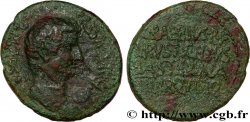
brm_259398 - TIBERIO Sesterce

non disponibile.
Articolo venduto sul nostro negozio (2011)
Prezzo : 115.00 €
Articolo venduto sul nostro negozio (2011)
Prezzo : 115.00 €
Tipo : Sesterce
Data: 35-36
Nome della officina / città: Roma
Metallo : rame
Diametro : 34,5 mm
Asse di coniazione : 7 h.
Peso : 24,84 g.
Grado di rarità : R2
Commenti sullo stato di conservazione:
Exemplaire à l’usure très importante, mais lisible et identifiable. Patine marron granuleuse et piquée
N° nelle opere di riferimento :
Diritto
Titolatura diritto : ANÉPIGRAPHE.
Descrittivo diritto : Quadrige au pas à droite (char triomphal).
Traduzione diritto : “Civitatibus Asiæ Restitutis”, (Pour la restauration des cités d’Asie).
Rovescio
Titolatura rovescio : TI CAESAR DIVI. AVG F AVGVST P M TR POT XXXVII.
Descrittivo rovescio : Grand S. C.
Traduzione rovescio : “Tiberius Cæsar Divi Augusti Filius Augusti Pontifex Maximus Tribunicia Potestate septimum tricesimum”, (Tibère césar fils du divin Auguste grand pontife revêtu de la trente-septième puissance tribunitienne).
Commento
Ce sesterce est bien en orichalque, du grec oreikhalkos, qui veut dire laiton. Ce métal ou alliage métallique est mentionné par plusieurs auteurs de l'Antiquité dont Pline. Le mot a désigné d'abord un métal précieux, puis des alliages du type bronze ou laiton. Le prix de la livre d’orichalque était de 3 deniers sous Auguste contre 2 seulement pour le cuivre.
This sestertius is indeed made of orichalcum, from the Greek oreikhalkos, which means brass. This metal or metal alloy is mentioned by several ancient authors, including Pliny. The word first designated a precious metal, then alloys such as bronze or brass. The price of a pound of orichalcum was 3 denarii under Augustus, compared to only 2 for copper.
This sestertius is indeed made of orichalcum, from the Greek oreikhalkos, which means brass. This metal or metal alloy is mentioned by several ancient authors, including Pliny. The word first designated a precious metal, then alloys such as bronze or brass. The price of a pound of orichalcum was 3 denarii under Augustus, compared to only 2 for copper.
Cronistoria
TIBERIO
(19/08/14-16/03/37)
Augusto
Tiberio, figlio di Tiberio Claudio Nerone e Livia, nacque il 16 novembre 42 a.C.. -VS. Suo padre, luogotenente di Cesare durante la guerra di Alessandria (48-47 a.C. -VS. ), poi si è avvicinato ad Antoine. Octave rapì Livia, la madre di Tiberio, e la sposò nel 38 a.C. -VS. mentre è incinta di Nerone Druso. A complicare ulteriormente l'albero genealogico dei Giulio-Claudi, Tiberio dovette divorziare da Vipsania per sposare Giulia, figlia di Augusto, vedova di Agrippa (12 a.C.).. -VS. ). Dopo averlo scelto come erede, Augusto gli preferisce i nipoti e Tiberio va quindi in esilio a Rodi.. Dopo un tentativo di complotto di Julie, Tibère divorzia da lei e non la rivedrà mai più.. Nel 4 Augusto adotta Tiberio che gli succede nel 14. Il suo regno durerà 23 anni. Germanico, che non gli piaceva, morì nel 19. Perse il figlio Druso nel 23, assassinato dalla moglie, Livilla, con l'aiuto del prefetto del Pretorio, Séjan, suo amante, che mantenne il potere fino al 31. Denunciato per i suoi crimini dalla cognata, Antonia, Séjan viene giustiziato. Tiberio si ritirò a Capri dall'anno 27, morì, forse assassinato, nel 37 e gli succedette il pronipote Caligola, pronipote di Augusto.
 Segnalare un errore
 Stampate la pagina
 Condividi mia selezione
 Fai una domanda
 Consegnare / vendere
 Descrittivo

Articoli visualizzati di recente

TIBERIO Sesterce q.MB
115.00 €

PROBO Aurelianus BB
13.00 €

PROBO Aurelianus q.SPL/SPL
57.00 €

NERONE Denier BB
602.17 €

TACITO Aurelianus MS
145.00 €
RUBRIA Denier BB
145.00 €
cgbfr.it numismatica


