


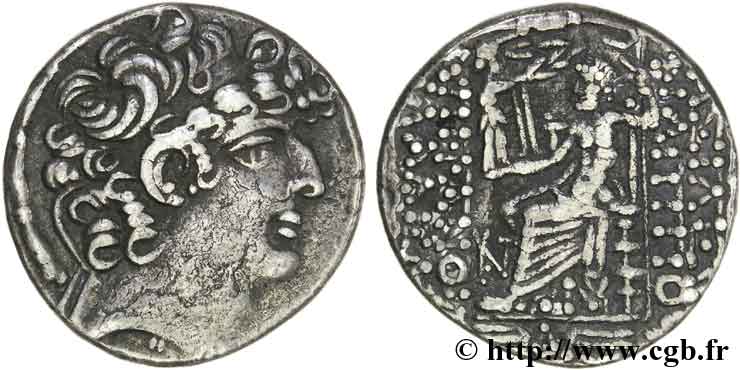
bpv_141548 - SIRIA - PROVINCIA ROMANA - QUINTO CAECILIO Tétradrachme syro-phénicien
non disponibile.
Articolo venduto sul nostro negozio (2015)
Prezzo : 180.00 €
Articolo venduto sul nostro negozio (2015)
Prezzo : 180.00 €
Tipo : Tétradrachme syro-phénicien
Data: 46-45 AC.
Nome della officina / città: Antioche, Syrie, Séleucie et Piérie
Metallo : argento
Diametro : 26 mm
Asse di coniazione : 12 h.
Peso : 14,52 g.
Commenti sullo stato di conservazione:
Centrage honorable, très bon au revers avec la date bien lisible, faible usure
N° nelle opere di riferimento :
Pedigree :
Cet exemplaire est le 0005_004 et provient de Birkland, Dix & Wood 06 10 1993, 78
Diritto
Descrittivo diritto : Tête diadémée de Philippe Philadelphe à droite, entouré de la stemma (O’).
Rovescio
Descrittivo rovescio : Zeus assis à gauche sur un trône avec dossier, tenant de la main droite une Niké qui le couronne et un sceptre long de la main gauche ; au-dessus de Zeus, le foudre ; monogramme dans le champ à gauche ; date à l’exergue. Un point au creux du bras gauche de Zeus.
Legenda rovescio : BASILEWS/ FILIPPOU/ EPIFANOUS/ FILADELFOU, D(Basilews Filippou Epifanous Filadelfou)
Traduzione rovescio : (Roi Philippe Epiphane Philadelphe/ monogramme d’Antioche et millésime 4 à l’exergue).
Commento
An 4 de l’ère césarienne, exemplaire classique de la série intermédiaire entre les frappes séleucides et les frappes impériales syriennes. La colonisation romaine est encore discrète et la prise de contrôle est aimable avec des constructions d’amphithéâtres, des travaux publics et des cérémonies. La monnaie, bien que contrôlée par Rome, reste au type séleucide et seul le petit monogramme indique la prise de pouvoir, ainsi que le millésime, ici l’an 4 de l’ère césarienne.
Notons l’importance quantitative de l’émission, probablement causée par les luttes fratricides entre césariens et pompéiens. On peut supposer l’émission faite par Sextus Julius Caesar, sans certitude, plutôt que par son rival pompéien, Quintus Caecilius Bassus, dans la mesure où l’ère césarienne est conservée pour dater la monnaie.
Style classique pour l’émission avec les mèches traitées en “serpents”.
Les émissions au type immobilisé de Philippe Philadelphe sont très importantes car elles illustrent parfaitement la logique impériale de la colonisation romaine. Autant une conquête de revendication territoriale d'expansion de l'espace vital autour d'un pouvoir central de type national va chercher à éliminer toutes les symboliques locales dans les pays conquis pour imposer celles du conquérant (selon le principe de un peuple, un roi, une foi, une loi), autant un empire va laisser cohabiter des symboliques différentes. C'est ce qui se passe en Syrie, Palestine et Phénicie dans les premiers temps de l'expansion. Loin d'imposer le denier ou la typologie romaine, les Latins vont respecter la métrologie et même le type. Il faudra attendre les rares émissions d'Auguste au revers du Zeus, presque cinquante ans, pour voir apparaître le portrait du Prince sur les monnaies locales en argent.
Pour cette émission, nous avons, d’après le RPC et son échantillon de dix pièces, sept coins de droit.
Dans la base TSP maintenue par Michel Prieur, soixante quinze exemplaires sont maintenant répertoriés.
Year 4 of the Caesarian era, a classic example of the intermediate series between the Seleucid and the Syrian imperial strikes. Roman colonization was still discreet and the takeover was friendly with the construction of amphitheaters, public works and ceremonies.. The coinage, although controlled by Rome, remains of the Seleucid type and only the small monogram indicates the seizure of power, as well as the year, here the year 4 of the Caesarian era..
Let us note the quantitative importance of the emission, probably caused by the fratricidal struggles between Caesarians and Pompeians. The issue can be assumed to have been made by Sextus Julius Caesar, without certainty, rather than by his Pompeian rival, Quintus Caecilius Bassus, since the Caesarian era is retained for dating the coinage..
Classic style for the show with the strands treated in “snakes”.
The immobilized type emissions of Philippe Philadelphe are very important because they perfectly illustrate the imperial logic of Roman colonization.. Just as a conquest of territorial claim of expansion of the living space around a central power of national type will seek to eliminate all local symbols in the conquered countries to impose those of the conqueror (according to the principle of one people, one king, one faith, one law), so an empire will allow different symbols to coexist. This is what happened in Syria, Palestine and Phoenicia in the early days of expansion.. Far from imposing the denarius or Roman typology, the Latins will respect metrology and even the type. It was not until the rare issues of Augustus on the reverse of the Zeus, almost fifty years later, that the portrait of the Prince appeared on local silver coins..
For this issue, we have, according to the RPC and its sample of ten coins, seven dies of right.
In the TSP database maintained by Michel Prieur, seventy-five examples are now listed.
Notons l’importance quantitative de l’émission, probablement causée par les luttes fratricides entre césariens et pompéiens. On peut supposer l’émission faite par Sextus Julius Caesar, sans certitude, plutôt que par son rival pompéien, Quintus Caecilius Bassus, dans la mesure où l’ère césarienne est conservée pour dater la monnaie.
Style classique pour l’émission avec les mèches traitées en “serpents”.
Les émissions au type immobilisé de Philippe Philadelphe sont très importantes car elles illustrent parfaitement la logique impériale de la colonisation romaine. Autant une conquête de revendication territoriale d'expansion de l'espace vital autour d'un pouvoir central de type national va chercher à éliminer toutes les symboliques locales dans les pays conquis pour imposer celles du conquérant (selon le principe de un peuple, un roi, une foi, une loi), autant un empire va laisser cohabiter des symboliques différentes. C'est ce qui se passe en Syrie, Palestine et Phénicie dans les premiers temps de l'expansion. Loin d'imposer le denier ou la typologie romaine, les Latins vont respecter la métrologie et même le type. Il faudra attendre les rares émissions d'Auguste au revers du Zeus, presque cinquante ans, pour voir apparaître le portrait du Prince sur les monnaies locales en argent.
Pour cette émission, nous avons, d’après le RPC et son échantillon de dix pièces, sept coins de droit.
Dans la base TSP maintenue par Michel Prieur, soixante quinze exemplaires sont maintenant répertoriés.
Year 4 of the Caesarian era, a classic example of the intermediate series between the Seleucid and the Syrian imperial strikes. Roman colonization was still discreet and the takeover was friendly with the construction of amphitheaters, public works and ceremonies.. The coinage, although controlled by Rome, remains of the Seleucid type and only the small monogram indicates the seizure of power, as well as the year, here the year 4 of the Caesarian era..
Let us note the quantitative importance of the emission, probably caused by the fratricidal struggles between Caesarians and Pompeians. The issue can be assumed to have been made by Sextus Julius Caesar, without certainty, rather than by his Pompeian rival, Quintus Caecilius Bassus, since the Caesarian era is retained for dating the coinage..
Classic style for the show with the strands treated in “snakes”.
The immobilized type emissions of Philippe Philadelphe are very important because they perfectly illustrate the imperial logic of Roman colonization.. Just as a conquest of territorial claim of expansion of the living space around a central power of national type will seek to eliminate all local symbols in the conquered countries to impose those of the conqueror (according to the principle of one people, one king, one faith, one law), so an empire will allow different symbols to coexist. This is what happened in Syria, Palestine and Phoenicia in the early days of expansion.. Far from imposing the denarius or Roman typology, the Latins will respect metrology and even the type. It was not until the rare issues of Augustus on the reverse of the Zeus, almost fifty years later, that the portrait of the Prince appeared on local silver coins..
For this issue, we have, according to the RPC and its sample of ten coins, seven dies of right.
In the TSP database maintained by Michel Prieur, seventy-five examples are now listed.
Cronistoria
SIRIA - PROVINCIA ROMANA - QUINTO CAECILIO
(46 a.C.)
Antiochia aveva scelto Cesare contro Pompeo dopo la vittoria di Farsalo (6 giugno 48 a.C.). Ha concesso la libertà alla città. Cesare risiedeva ad Antiochia nel 47 a.C. e vi lasciò un giovane parente, Sesto Cesare, che fu rovesciato da Quinto Cecilio Basso nel 46 a.C. e ucciso. Basso apparteneva al partito pompeiano. Doveva combattere contro il nuovo governatore cesariano Lucius Antestius Vetus. Basso catturò Apamea, ma fu sconfitto da Lucius Staius Murcus, proconsole di Siria.
 Segnalare un errore
 Stampate la pagina
 Condividi mia selezione
 Fai una domanda
 Consegnare / vendere
Articoli correlati

 Descrittivo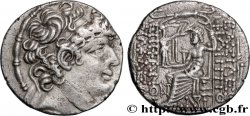


Articoli visualizzati di recente
LOUIS XIV "THE SUN KING" Poids monétaire pour le double louis de Louis XIV n.d.
45.00 €

FLANDRE - COMTÉ DE FLANDRE - JEAN SANS PEUR Double gros "penning Jans" n.d. Gan
120.00 €

AUSTRIA 25 Schilling emblème / 100e anniversaire de la naissance du chimiste Ca
10.00 €
cgbfr.it numismatica


