


E-auction 165-101753 - bpv_154323 - FILIPPO I PADRE Tétradrachme syro-phénicien

Devi Sign-in ed essere un offerente approvato fare un'offerta, Login per fare offerte. Conti sono soggetti ad approvazione e di approvazione sono raggiunti entro 48 ore. Non aspettare fino al giorno di una vendita si chiude per registrarti.Confermando la tua offerta su questo oggetto ti impegni ad un contratto legalmente vincolante per l'acquisto di questo prodotto e fare clic su «offerta» costituisce accettazione dei termini di utilizzo de e-auctions cgb.fr.
Offerta deve essere collocato in euro gli importi interi vendita only.The si chiuderà al momento sulla descrizione dell'oggetto, eventuali offerte pervenute al sito dopo l'orario di chiusura non verranno eseguite. Volte transmition possono variare e le offerte potrebbero essere respinto se si attende per gli ultimi secondi. Per ulteriori informazioni ckeck le FAQ.
SENZA COSTI PER GLI ACQUIRENTI.
SENZA COSTI PER GLI ACQUIRENTI.
| Valutazione : | 140 € |
| Prezzo : | 39 € |
| Offerta maxima : | 42 € |
| Data di fine vendita : | 13 giugno 2016 15:17:00 |
| partecipanti : | 5 partecipanti |
Tipo : Tétradrachme syro-phénicien
Data: 249
Nome della officina / città: Antioche, Syrie, Séleucie et Piérie
Metallo : billone
Diametro : 28,00 mm
Asse di coniazione : 6 h.
Peso : 11,65 g.
Grado di rarità : R1
Commenti sullo stato di conservazione:
Faible usure, bon centrage, frappe et surfaces, irrégularités dans le métal au revers
N° nelle opere di riferimento :
Pedigree :
Cet exemplaire est le 0485_006 de la base TSP
Diritto
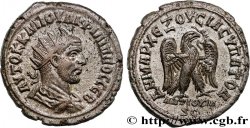
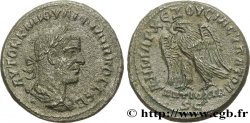
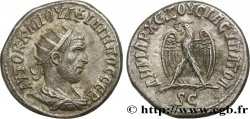
Descrittivo diritto : Buste lauré, drapé et cuirassé de Philippe Ier à droite, vu de trois quarts en arrière (A*2), quatre globules sous le buste.
Legenda diritto : AUTOK K M IOUL FILIPPOS SEB, (Autokratoros Kaisaros Markos Ioulios Filippos Sebastos)
Traduzione diritto : (L’empereur césar Marc Jules Philippe auguste).
Rovescio
Titolatura rovescio : ANTIOXIA / S|C À L’EXERGUE.
Descrittivo rovescio : Aigle debout à droite, les ailes largement déployées, tête à droite et queue à gauche, tenant une couronne feuillée dans son bec.
Legenda rovescio : DHMARC - EX OUSIAS UPATOD
Traduzione rovescio : (Revêtu de la puissance tribunitienne / Consul pour la quatrième fois / avec l’accord du Sénat d’Antioche).
Commento
Ces frappes à marques d’officines sont la fin des émissions pour Philippe père et fils, simplement parce que cette même méthode se poursuivra sous le règne de son successeur, Trajan Dèce, alors qu’elle n’existe pas avant le quatrième consulat de Philippe.
Le marquage des officines se fait par points sous le buste, de un à quatre, mais il est possible, au style, de penser que ces émissions comportent aussi une officine sans point. Cette question se réglera, comme tant d’autres, par une reconstitution des chaînes de coins qui montrera, ou non, une série particulière, sans point, du même style de gravure des bustes que les frappes avec points.
Le classement des bustes avec deux points sous la cuirasse, qui se trouvent tant pour le père que pour le fils, dans cette série à officines indiquées, est pratiquement certain. Les arguments en faveur sont la faiblesse des émissions de Philippe père, pour la deuxième officine, avec le buste standard ; on peut donc penser que la production de cette officine a été répartie entre les deux types de bustes alors que celles des autres se concentraient sur des bustes standards, laurés, drapés et cuirassés à droite.
Pour le fils, les émissions avec deux points sous la cuirasse viennent peut-être compléter les émissions de cette officine à buste standard car, là, ce sont les frappes avec aigle à droite qui sont inconnues et n’existent peut-être pas.
Ces émissions sont fort rares et précèdent certainement de très peu la chute des Philippe. On ne peut pas déterminer actuellement le motif de cette réorganisation, peut-être à réfléchir en comparaison avec les frappes d’antoniniens.
Curieusement, elles sont peu présentes en musées, ou d’acquisitions récentes. Aucun exemplaire n’est référencé dans le BMC et il semble que sans les trouvailles de Doura, l’émission serait restée ignorée.
Dès que Philippe II est proclamé auguste, il utilise toujours les titres de son père au revers mais encore adopte sa titulature de droit. Les collectionneurs débutants ont d’ailleurs des difficultés à distinguer le père du fils ; la règle est simple : le père a toujours une ride qui barre le front, le fils toujours un front lisse.
On note que les sigma sont gravés en C.
Dans la base TSP maintenue par Michel Prieur, vingt-six exemplaires sont maintenant répertoriés pour ce type, dont trois en musées, l’un à Yale, l’autre à Paris, ex vente Hirsch 159 (septembre 1988), n° 1024 et un dernier à l’ANS.
These strikes with office marks are the end of the issues for Philip father and son, simply because this same method will continue under the reign of his successor, Trajan Decius, whereas it does not exist before the fourth consulate of Philip.
The marking of the pharmacies is done by points under the bust, from one to four, but it is possible, from the style, to think that these emissions also include a pharmacy without points. This question will be resolved, like so many others, by a reconstruction of the chains of dies which will show, or not, a particular series, without point, of the same style of engraving of the busts as the strikes with points.
The classification of the busts with two points under the armor, which are found for both the father and the son, in this series with indicated offices, is practically certain. The arguments in favor are the weakness of the issues of Philippe père, for the second workshop, with the standard bust; we can therefore think that the production of this workshop was divided between the two types of busts while those of the others concentrated on standard busts, laureates, draped and cuirassed on the right.
For the son, the issues with two points under the armor perhaps complement the issues of this office with a standard bust because, there, it is the strikes with an eagle on the right which are unknown and perhaps do not exist..
These issues are very rare and certainly precede the fall of the Philippes by a very short time.. The reason for this reorganization cannot be determined at present, perhaps in comparison with the Antoninian strikes..
Curiously, they are rarely found in museums, or are recent acquisitions.. No example is referenced in the BMC and it seems that without Doura's finds, the broadcast would have remained unknown..
As soon as Philip II was proclaimed Augustus, he still used his father's titles on the reverse but also adopted his title by right.. Beginner collectors have difficulty distinguishing the father from the son; the rule is simple: the father always has a wrinkle across his forehead, the son always has a smooth forehead..
Note that the sigmas are engraved in C.
In the TSP database maintained by Michel Prieur, twenty-six examples are now listed for this type, including three in museums, one at Yale, the other in Paris, ex Hirsch sale 159 (September 1988), n° 1024 and a last one at the ANS
Le marquage des officines se fait par points sous le buste, de un à quatre, mais il est possible, au style, de penser que ces émissions comportent aussi une officine sans point. Cette question se réglera, comme tant d’autres, par une reconstitution des chaînes de coins qui montrera, ou non, une série particulière, sans point, du même style de gravure des bustes que les frappes avec points.
Le classement des bustes avec deux points sous la cuirasse, qui se trouvent tant pour le père que pour le fils, dans cette série à officines indiquées, est pratiquement certain. Les arguments en faveur sont la faiblesse des émissions de Philippe père, pour la deuxième officine, avec le buste standard ; on peut donc penser que la production de cette officine a été répartie entre les deux types de bustes alors que celles des autres se concentraient sur des bustes standards, laurés, drapés et cuirassés à droite.
Pour le fils, les émissions avec deux points sous la cuirasse viennent peut-être compléter les émissions de cette officine à buste standard car, là, ce sont les frappes avec aigle à droite qui sont inconnues et n’existent peut-être pas.
Ces émissions sont fort rares et précèdent certainement de très peu la chute des Philippe. On ne peut pas déterminer actuellement le motif de cette réorganisation, peut-être à réfléchir en comparaison avec les frappes d’antoniniens.
Curieusement, elles sont peu présentes en musées, ou d’acquisitions récentes. Aucun exemplaire n’est référencé dans le BMC et il semble que sans les trouvailles de Doura, l’émission serait restée ignorée.
Dès que Philippe II est proclamé auguste, il utilise toujours les titres de son père au revers mais encore adopte sa titulature de droit. Les collectionneurs débutants ont d’ailleurs des difficultés à distinguer le père du fils ; la règle est simple : le père a toujours une ride qui barre le front, le fils toujours un front lisse.
On note que les sigma sont gravés en C.
Dans la base TSP maintenue par Michel Prieur, vingt-six exemplaires sont maintenant répertoriés pour ce type, dont trois en musées, l’un à Yale, l’autre à Paris, ex vente Hirsch 159 (septembre 1988), n° 1024 et un dernier à l’ANS.
These strikes with office marks are the end of the issues for Philip father and son, simply because this same method will continue under the reign of his successor, Trajan Decius, whereas it does not exist before the fourth consulate of Philip.
The marking of the pharmacies is done by points under the bust, from one to four, but it is possible, from the style, to think that these emissions also include a pharmacy without points. This question will be resolved, like so many others, by a reconstruction of the chains of dies which will show, or not, a particular series, without point, of the same style of engraving of the busts as the strikes with points.
The classification of the busts with two points under the armor, which are found for both the father and the son, in this series with indicated offices, is practically certain. The arguments in favor are the weakness of the issues of Philippe père, for the second workshop, with the standard bust; we can therefore think that the production of this workshop was divided between the two types of busts while those of the others concentrated on standard busts, laureates, draped and cuirassed on the right.
For the son, the issues with two points under the armor perhaps complement the issues of this office with a standard bust because, there, it is the strikes with an eagle on the right which are unknown and perhaps do not exist..
These issues are very rare and certainly precede the fall of the Philippes by a very short time.. The reason for this reorganization cannot be determined at present, perhaps in comparison with the Antoninian strikes..
Curiously, they are rarely found in museums, or are recent acquisitions.. No example is referenced in the BMC and it seems that without Doura's finds, the broadcast would have remained unknown..
As soon as Philip II was proclaimed Augustus, he still used his father's titles on the reverse but also adopted his title by right.. Beginner collectors have difficulty distinguishing the father from the son; the rule is simple: the father always has a wrinkle across his forehead, the son always has a smooth forehead..
Note that the sigmas are engraved in C.
In the TSP database maintained by Michel Prieur, twenty-six examples are now listed for this type, including three in museums, one at Yale, the other in Paris, ex Hirsch sale 159 (September 1988), n° 1024 and a last one at the ANS
Cronistoria
FILIPPO I PADRE
(03/244-09/249)
Philippe nacque a Bostra in Trachonitis, una provincia dell'Arabia, da cui il soprannome dell'Imperatore. Fu nominato Prefetto del Pretorio dopo la scomparsa di Timésithée, suocero di Gordiano III, nel 243. Filippo fece assassinare o fece assassinare Gordiano all'inizio del 244, poi si affrettò a concludere un'infame pace con i Sassanidi . Paga loro un tributo di 500.000 denari. Chiamò suo figlio Filippo Cesare nel 244 e sua moglie Otacilia Sévéra augusta. Nel 247, Filippo eleva suo figlio ad agosto. Condusse una brillante campagna contro i Quadi ei Carpi che avevano invaso la Dacia. Il grande evento del regno di Filippo è la commemorazione del millennio di Roma che inizia il 21 aprile 247. Diversi usurpatori, tra cui Jotapien e Pacatian, si proclamano augusti alla fine del regno. Philippe incarica Decio, comandante delle legioni della Pannonia, di ristabilire l'ordine sul Danubio. Le truppe, contro la sua volontà, proclamano Decio augusto nel giugno o luglio 249. Filippo muore combattendo le truppe di Decio nel settembre 249.
 Segnalare un errore
 Stampate la pagina
 Condividi mia selezione
 Fai una domanda
 Consegnare / vendere
Articoli correlati
 Descrittivo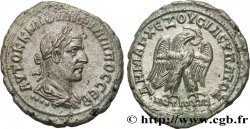


Articoli visualizzati di recente
500 Francs LA PAIX FRANCIA 1941 F.32.15 AU+
100.00 €
10000 Francs STATI AMERICANI AFRICANI 2012 P.818Tj FDC
47.00 €
1000 Francs DÉESSE DÉMÉTER FRANCIA 1943 F.40.21 AU
40.00 €

100 Francs CORNEILLE FRANCIA 1977 F.65.56 AU
50.00 €

LICINIO I PADRE Follis ou nummus q.SPL
50.00 €
BOURSE - AGENTS DE CHANGE LOUIS XIV, refrappe ABEILLE ARGENT SPL
65.00 €
cgbfr.it numismatica


