


E-auction 153-91241 - bpv_153788 - FILIPPO I PADRE Tétradrachme syro-phénicien
Devi Sign-in ed essere un offerente approvato fare un'offerta, Login per fare offerte. Conti sono soggetti ad approvazione e di approvazione sono raggiunti entro 48 ore. Non aspettare fino al giorno di una vendita si chiude per registrarti.Confermando la tua offerta su questo oggetto ti impegni ad un contratto legalmente vincolante per l'acquisto di questo prodotto e fare clic su «offerta» costituisce accettazione dei termini di utilizzo de e-auctions cgb.fr.
Offerta deve essere collocato in euro gli importi interi vendita only.The si chiuderà al momento sulla descrizione dell'oggetto, eventuali offerte pervenute al sito dopo l'orario di chiusura non verranno eseguite. Volte transmition possono variare e le offerte potrebbero essere respinto se si attende per gli ultimi secondi. Per ulteriori informazioni ckeck le FAQ.
SENZA COSTI PER GLI ACQUIRENTI.
SENZA COSTI PER GLI ACQUIRENTI.
| Valutazione : | 75 € |
| Prezzo : | 18 € |
| Offerta maxima : | 19 € |
| Data di fine vendita : | 21 marzo 2016 15:15:30 |
| partecipanti : | 4 partecipanti |
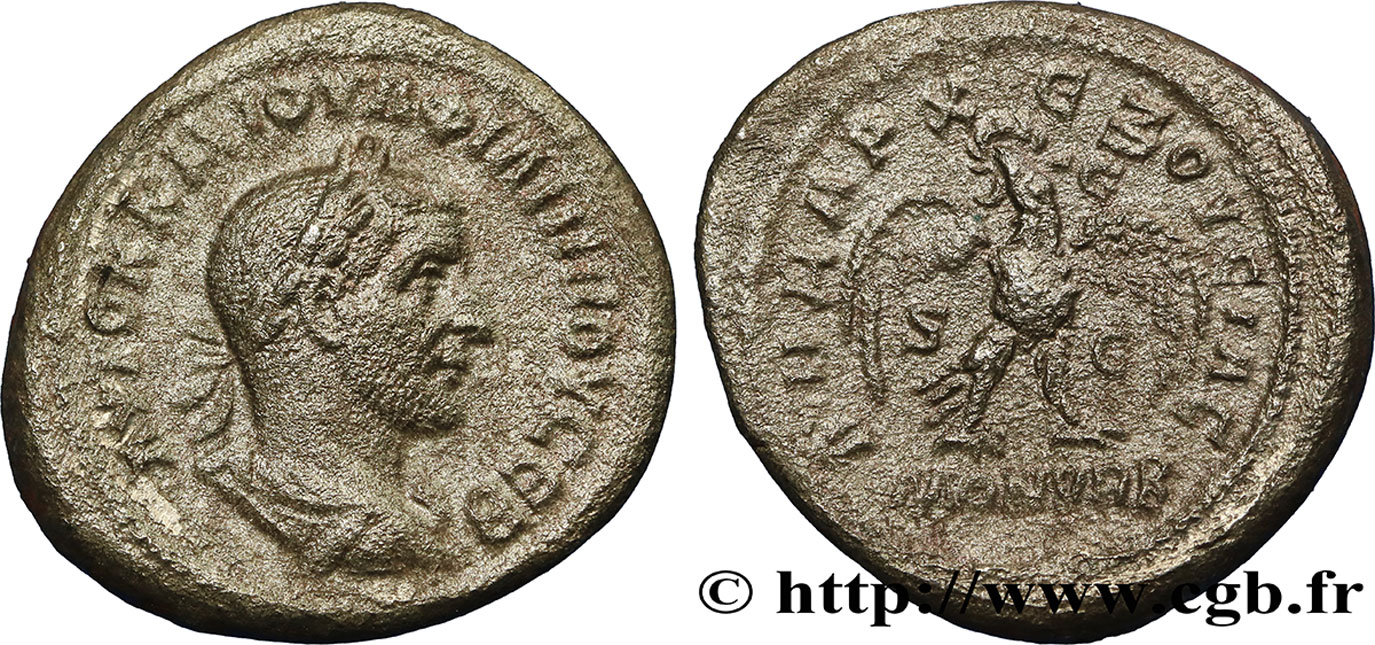
Tipo : Tétradrachme syro-phénicien
Data: 244
Nome della officina / città: Antioche, Syrie, Séleucie et Piérie
Metallo : billone
Diametro : 28,00 mm
Asse di coniazione : 6 h.
Peso : 12,05 g.
Grado di rarità : R1
Commenti sullo stato di conservazione:
Frappe complète et centrée mais coins mous et piqûres de corrosion sur la surface
N° nelle opere di riferimento :
Pedigree :
Cet exemplaire est le 0309_026 de la base TSP
Diritto
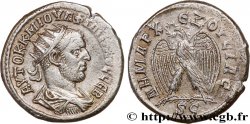
Descrittivo diritto : Buste lauré, drapé et cuirassé de Philippe Ier à droite, vu de trois quarts en arrière (A*2).
Legenda diritto : AUTOK K M IOUL FILIPPOU SEB, (Autokratoros Kaisaros Markos Ioulios Filippos Sebastos)
Traduzione diritto : (L’empereur césar Marc Jules Philippe auguste).
Rovescio
Titolatura rovescio : S|C// MON VRB À L’EXERGUE // ETA DANS LE CHAMP.
Descrittivo rovescio : Aigle debout à droite, les ailes déployées, tête et queue à gauche, tenant une couronne feuillée dans son bec, sans ligne de terre.
Legenda rovescio : DHMARC - EX OUSIAS / E
Traduzione rovescio : (Revêtu de la puissance tribunitienne/ Monnaie de la Ville / avec l’accord du Sénat).
Commento
Les premières émissions de Philippe se subdivisent en frappes sans marque d’officine et avec ligne de terre, frappes sans marque d’officine et sans ligne de terre, puis frappes avec marques d’officine et sans ligne de terre.
Notre exemplaire appartient à cette catégorie, pour la cinquième officine (Eta), qui, sans être aussi rare que la deuxième officine, se rencontre assez difficilement.
La question du lieu de frappe, au sens de fabrication et non de mise en circulation, a été tranchée par H. R. Baldus, Moneta Urbis - Antioxia, Francfort 1969, et il semble bien que ces monnaies ont été fabriquées à Rome, plutôt qu’à Antioche.
Le raisonnement de H.R. Baldus concernant cette émission de Philippe repose avant tout sur la signature de l’atelier au revers : dans le monde romain, l’Urbs, la Ville, ne peut être que Rome. Le cas n’est pas isolé et il a été déterminé, par exemple, que des tétradrachmes d’Alexandrie pour Sévère Alexandre avaient été frappés à Rome puis envoyés en Égypte ; on peut penser que des questions de prix de revient et de qualité de fabrication furent à l’origine de ces migrations.
Effectivement, les portraits de cette émission sont exceptionnellement bons, équivalents aux meilleurs sesterces de l’atelier de Rome.
Autre particularité de cette émission, le retour du SC, disparu des revers entre 242 et 244, après avoir remplacé à Antioche le Delta Eta apparu en 215, et jamais vu dans un autre atelier officiel. Si nous suivons la logique développée pour ces émissions, il faut croire que ces frappes de Philippe ont reçu l’assentiment (au moins) et le financement (au plus) du sénat d’Antioche. Une gigantesque rançon ayant été payée aux Perses pour abréger la guerre, le propre frère de Philippe étant gouverneur de Syrie, sa propre famille en étant originaire, on peut au moins penser que le Sénat regagna de son importance de l’époque des Sévères. La réputation de Priscus étant de pressurer la population - au point de susciter l’usurpateur Jotapian - on peut aussi penser que le produit de ces spoliations servit à frapper des tétradrachmes au portrait et donc à la gloire de l’Empereur.
On note que les sigma sont gravés en C.
Dans la base TSP maintenue par Michel Prieur, quarante exemplaires sont maintenant répertoriés pour la cinquième officine dont en musées Paris, Yale (2, 1 ex Doura), ANS et Berlin.
The first issues of Philippe are subdivided into strikes without an office mark and with a ground line, strikes without an office mark and without a ground line, then strikes with an office mark and without a ground line..
Our specimen belongs to this category, for the fifth pharmacy (Eta), which, without being as rare as the second pharmacy, is quite difficult to find..
The question of the place of minting, in the sense of manufacture and not of putting into circulation, was decided by H. R. Baldus, Moneta Urbis - Antioxia, Frankfurt 1969, and it seems that these coins were made in Rome, rather than in Antioch.
H's reasoning. R. Baldus's opinion on this issue of Philip rests above all on the workshop signature on the reverse: in the Roman world, the Urbs, the City, can only be Rome.. This is not an isolated case and it has been determined, for example, that Alexandrian tetradrachms for Severus Alexander were minted in Rome and then sent to Egypt; it is possible to assume that questions of cost price and manufacturing quality were at the origin of these migrations..
Indeed, the portraits in this issue are exceptionally good, equivalent to the best sesterces from the Roman workshop..
Another particularity of this issue is the return of the SC, which disappeared from the reverses between 242 and 244, after having replaced the Delta Eta in Antioch, which appeared in 215, and never seen in another official mint.. If we follow the logic developed for these emissions, we must believe that these strikes of Philip received the assent (at least) and the financing (at most) of the senate of Antioch. A gigantic ransom having been paid to the Persians to shorten the war, Philip's own brother being governor of Syria, his own family being from there, one can at least think that the Senate regained its importance of the time of the Severans. Priscus's reputation for squeezing the population - to the point of giving rise to the usurper Jotapian - we can also think that the product of these spoliations was used to strike tetradrachms with the portrait and therefore to the glory of the Emperor..
Note that the sigmas are engraved in C.
In the TSP database maintained by Michel Prieur, forty examples are now listed for the fifth office, including in museums in Paris, Yale (2, 1 ex Doura), ANS and Berlin.
Notre exemplaire appartient à cette catégorie, pour la cinquième officine (Eta), qui, sans être aussi rare que la deuxième officine, se rencontre assez difficilement.
La question du lieu de frappe, au sens de fabrication et non de mise en circulation, a été tranchée par H. R. Baldus, Moneta Urbis - Antioxia, Francfort 1969, et il semble bien que ces monnaies ont été fabriquées à Rome, plutôt qu’à Antioche.
Le raisonnement de H.R. Baldus concernant cette émission de Philippe repose avant tout sur la signature de l’atelier au revers : dans le monde romain, l’Urbs, la Ville, ne peut être que Rome. Le cas n’est pas isolé et il a été déterminé, par exemple, que des tétradrachmes d’Alexandrie pour Sévère Alexandre avaient été frappés à Rome puis envoyés en Égypte ; on peut penser que des questions de prix de revient et de qualité de fabrication furent à l’origine de ces migrations.
Effectivement, les portraits de cette émission sont exceptionnellement bons, équivalents aux meilleurs sesterces de l’atelier de Rome.
Autre particularité de cette émission, le retour du SC, disparu des revers entre 242 et 244, après avoir remplacé à Antioche le Delta Eta apparu en 215, et jamais vu dans un autre atelier officiel. Si nous suivons la logique développée pour ces émissions, il faut croire que ces frappes de Philippe ont reçu l’assentiment (au moins) et le financement (au plus) du sénat d’Antioche. Une gigantesque rançon ayant été payée aux Perses pour abréger la guerre, le propre frère de Philippe étant gouverneur de Syrie, sa propre famille en étant originaire, on peut au moins penser que le Sénat regagna de son importance de l’époque des Sévères. La réputation de Priscus étant de pressurer la population - au point de susciter l’usurpateur Jotapian - on peut aussi penser que le produit de ces spoliations servit à frapper des tétradrachmes au portrait et donc à la gloire de l’Empereur.
On note que les sigma sont gravés en C.
Dans la base TSP maintenue par Michel Prieur, quarante exemplaires sont maintenant répertoriés pour la cinquième officine dont en musées Paris, Yale (2, 1 ex Doura), ANS et Berlin.
The first issues of Philippe are subdivided into strikes without an office mark and with a ground line, strikes without an office mark and without a ground line, then strikes with an office mark and without a ground line..
Our specimen belongs to this category, for the fifth pharmacy (Eta), which, without being as rare as the second pharmacy, is quite difficult to find..
The question of the place of minting, in the sense of manufacture and not of putting into circulation, was decided by H. R. Baldus, Moneta Urbis - Antioxia, Frankfurt 1969, and it seems that these coins were made in Rome, rather than in Antioch.
H's reasoning. R. Baldus's opinion on this issue of Philip rests above all on the workshop signature on the reverse: in the Roman world, the Urbs, the City, can only be Rome.. This is not an isolated case and it has been determined, for example, that Alexandrian tetradrachms for Severus Alexander were minted in Rome and then sent to Egypt; it is possible to assume that questions of cost price and manufacturing quality were at the origin of these migrations..
Indeed, the portraits in this issue are exceptionally good, equivalent to the best sesterces from the Roman workshop..
Another particularity of this issue is the return of the SC, which disappeared from the reverses between 242 and 244, after having replaced the Delta Eta in Antioch, which appeared in 215, and never seen in another official mint.. If we follow the logic developed for these emissions, we must believe that these strikes of Philip received the assent (at least) and the financing (at most) of the senate of Antioch. A gigantic ransom having been paid to the Persians to shorten the war, Philip's own brother being governor of Syria, his own family being from there, one can at least think that the Senate regained its importance of the time of the Severans. Priscus's reputation for squeezing the population - to the point of giving rise to the usurper Jotapian - we can also think that the product of these spoliations was used to strike tetradrachms with the portrait and therefore to the glory of the Emperor..
Note that the sigmas are engraved in C.
In the TSP database maintained by Michel Prieur, forty examples are now listed for the fifth office, including in museums in Paris, Yale (2, 1 ex Doura), ANS and Berlin.
Cronistoria
FILIPPO I PADRE
(03/244-09/249)
Philippe nacque a Bostra in Trachonitis, una provincia dell'Arabia, da cui il soprannome dell'Imperatore. Fu nominato Prefetto del Pretorio dopo la scomparsa di Timésithée, suocero di Gordiano III, nel 243. Filippo fece assassinare o fece assassinare Gordiano all'inizio del 244, poi si affrettò a concludere un'infame pace con i Sassanidi . Paga loro un tributo di 500.000 denari. Chiamò suo figlio Filippo Cesare nel 244 e sua moglie Otacilia Sévéra augusta. Nel 247, Filippo eleva suo figlio ad agosto. Condusse una brillante campagna contro i Quadi ei Carpi che avevano invaso la Dacia. Il grande evento del regno di Filippo è la commemorazione del millennio di Roma che inizia il 21 aprile 247. Diversi usurpatori, tra cui Jotapien e Pacatian, si proclamano augusti alla fine del regno. Philippe incarica Decio, comandante delle legioni della Pannonia, di ristabilire l'ordine sul Danubio. Le truppe, contro la sua volontà, proclamano Decio augusto nel giugno o luglio 249. Filippo muore combattendo le truppe di Decio nel settembre 249.
 Segnalare un errore
 Stampate la pagina
 Condividi mia selezione
 Fai una domanda
 Consegnare / vendere
Articoli correlati

 Descrittivo

Articoli visualizzati di recente

5 Francs Cabasson rouge GUADELOUPE 1928 P.07b q.MB
250.00 €

1 Dollar STATI UNITI D'AMERICA New York 1977 P.462b q.BB
11.00 €
CARACALLA Tétradrachme syro-phénicien MB
64.00 €
REGNO UNITO 1 Farthing Georges IV tête laurée 1823 SPL
90.00 €
cgbfr.it numismatica


