


bpv_192801 - NERONE Tétradrachme syro-phénicien

non disponibile.
Articolo venduto sul nostro negozio (2014)
Prezzo : 220.00 €
Articolo venduto sul nostro negozio (2014)
Prezzo : 220.00 €
Tipo : Tétradrachme syro-phénicien
Data: an 10 / 112
Nome della officina / città: Antioche, Syrie, Séleucie et Piérie
Metallo : argento
Diametro : 25 mm
Asse di coniazione : 12 h.
Peso : 14,62 g.
Grado di rarità : R1
Commenti sullo stato di conservazione:
Faible usure de circulation, bon centrage au revers, très beau portrait mais traces de corrosion
N° nelle opere di riferimento :
Pedigree :
Cet exemplaire, qui provient de la trouvaille dite de Banias, est le 0089A_015
Diritto
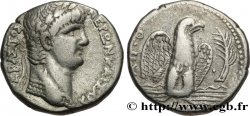
Descrittivo diritto : Buste lauré de Néron à droite avec l'égide sur le cou (O*4), et la coiffure adulte.
Legenda diritto : NERWN KAISAR - SEBASTOS, (Nerwn Kaisar SebastoV)
Traduzione diritto : (Néron césar auguste).
Rovescio
Descrittivo rovescio : Aigle debout à droite sur un foudre ailé, les ailes déployées ; dans le champ à droite, une palme verticale, sans point dans le champ.
Legenda rovescio : ETOUS / BIR.I
Traduzione rovescio : An 112 de l’ère césarienne - An 10 du règne.
Commento
L’examen des émissions successives de Néron à Antioche étonne car chaque séquence de frappe se caractérise par un style et un graveur différent : tout se passe comme si la gravure des coins de droit faisait l’objet d’une mise aux enchères et de l’attribution d’un marché, un seul graveur réalisant tous les coins de droit de l’année. Il est d’ailleurs assez facile de dater ces monnaies en regardant simplement le portrait, sans retourner la pièce ni donc lire la date qui s’y trouve. Certes, nous n’avons pas d’informations sur l’organisation de l’atelier d’Antioche mais il est plausible, au vu de la grande qualité de certains des graveurs, qu’il s’agissait d’artisans et non d’esclaves ; par ailleurs, la personnalisation des représentations impériales, la faculté, bien mieux qu’à Rome, d’y laisser transparaître leur personnalité jusqu’à la limite du pamphlet politique, laisse penser que l’école hellénistique et non romaine formait les graveurs d’Antioche.
Comme il n’est de règle qui n’ait d’exception, nous avons du séparer en deux, comme les auteurs du RPC l’avaient déjà fait, les frappes de l’an 112 ; en effet, il a fallu créer le Prieur 89A pour accueillir un graveur différent, plus proche de celui qui réalisera les Prieur 90.
L’empereur avait-il encore grossi qu’il faille changer de portrait et de graveur ?
Cette variante de graveur est rare et dans la base TSP maintenue par Michel Prieur, dix-neuf exemplaires seulement sont maintenant répertorié.
The examination of the successive issues of Nero in Antioch is surprising because each striking sequence is characterized by a different style and a different engraver: everything happens as if the engraving of the obverse dies was the subject of an auction and the allocation of a contract, with a single engraver producing all the obverse dies of the year.. It is also quite easy to date these coins by simply looking at the portrait, without turning the coin over or reading the date on it.. Certainly, we have no information on the organization of the Antioch workshop but it is plausible, given the high quality of some of the engravers, that they were artisans and not slaves; moreover, the personalization of the imperial representations, the ability, much better than in Rome, to let their personality shine through to the limit of the political pamphlet, suggests that the Hellenistic school and not the Roman school trained the engravers of Antioch.
As there is no rule without an exception, we had to separate the strikes of the year 112 into two, as the authors of the RPC had already done; in fact, it was necessary to create the Prieur 89A to accommodate a different engraver, closer to the one who would produce the Prieur 90.
Had the emperor grown even bigger that the portrait and engraver had to be changed? This variant of engraver is rare and in the TSP database maintained by Michel Prieur, only nineteen examples are now listed.
Comme il n’est de règle qui n’ait d’exception, nous avons du séparer en deux, comme les auteurs du RPC l’avaient déjà fait, les frappes de l’an 112 ; en effet, il a fallu créer le Prieur 89A pour accueillir un graveur différent, plus proche de celui qui réalisera les Prieur 90.
L’empereur avait-il encore grossi qu’il faille changer de portrait et de graveur ?
Cette variante de graveur est rare et dans la base TSP maintenue par Michel Prieur, dix-neuf exemplaires seulement sont maintenant répertorié.
The examination of the successive issues of Nero in Antioch is surprising because each striking sequence is characterized by a different style and a different engraver: everything happens as if the engraving of the obverse dies was the subject of an auction and the allocation of a contract, with a single engraver producing all the obverse dies of the year.. It is also quite easy to date these coins by simply looking at the portrait, without turning the coin over or reading the date on it.. Certainly, we have no information on the organization of the Antioch workshop but it is plausible, given the high quality of some of the engravers, that they were artisans and not slaves; moreover, the personalization of the imperial representations, the ability, much better than in Rome, to let their personality shine through to the limit of the political pamphlet, suggests that the Hellenistic school and not the Roman school trained the engravers of Antioch.
As there is no rule without an exception, we had to separate the strikes of the year 112 into two, as the authors of the RPC had already done; in fact, it was necessary to create the Prieur 89A to accommodate a different engraver, closer to the one who would produce the Prieur 90.
Had the emperor grown even bigger that the portrait and engraver had to be changed? This variant of engraver is rare and in the TSP database maintained by Michel Prieur, only nineteen examples are now listed.
Cronistoria
NERONE
(13/10/54-9/06/68)
Augusto
Nerone è certamente uno degli imperatori più noti, grazie a Tacito e Svetonio, ma anche uno dei più denigrati. È l'ultimo rappresentante della dinastia giulio-claudia. Figlio di Agrippina, seconda moglie di Claudio, e di Gneio Domizio Enobarbo, nacque nel 37. Discende sia da Augusto attraverso la madre che da Giulia attraverso il nonno materno, Germanico. Dopo l'assassinio di Claude da parte di Agrippina con l'aiuto di Locuste nel 54, all'età di 17 anni, iniziò il suo regno sotto buoni auspici. Aiutato da Seneca, suo precettore, e da Burro, prefetto del pretorio, governò con intelligenza con il Senato. Sposò Ottavia, figlia di Claudio e Messalina. Il fratello di Octavie, Britannico, muore in condizioni misteriose nel 55 d.C. (avvelenato?). Dopo il "quinquennum aureum" (54-59), l'imperatore fece o permise che sua madre fosse assassinata. Gli ultimi nove anni di regno destabilizzeranno il principato.
 Segnalare un errore
 Stampate la pagina
 Condividi mia selezione
 Fai una domanda
 Consegnare / vendere
Articoli correlati
 Descrittivo


cgbfr.it numismatica


