


E-auction 686-733814 - MONNAIE DE PARIS COMMISSION MONÉTAIRE 1891
Devi Sign-in ed essere un offerente approvato fare un'offerta, Login per fare offerte. Conti sono soggetti ad approvazione e di approvazione sono raggiunti entro 48 ore. Non aspettare fino al giorno di una vendita si chiude per registrarti.Confermando la tua offerta su questo oggetto ti impegni ad un contratto legalmente vincolante per l'acquisto di questo prodotto e fare clic su «offerta» costituisce accettazione dei termini di utilizzo de e-auctions cgb.fr.
Offerta deve essere collocato in euro gli importi interi vendita only.The si chiuderà al momento sulla descrizione dell'oggetto, eventuali offerte pervenute al sito dopo l'orario di chiusura non verranno eseguite. Volte transmition possono variare e le offerte potrebbero essere respinto se si attende per gli ultimi secondi. Per ulteriori informazioni ckeck le FAQ.
SENZA COSTI PER GLI ACQUIRENTI.
SENZA COSTI PER GLI ACQUIRENTI.
Tipo : COMMISSION MONÉTAIRE
Data: 1891
Metallo : argento
Diametro : 33,50 mm
Asse di coniazione : 12 h.
Peso : 13,56 g.
Orlo : lisse
Marchio : corne ARGENT
Grado di rarità : R3
Commenti sullo stato di conservazione:
Patine grise hétérogène avec de l’usure sur les reliefs. Quelques coups et trayures
Diritto
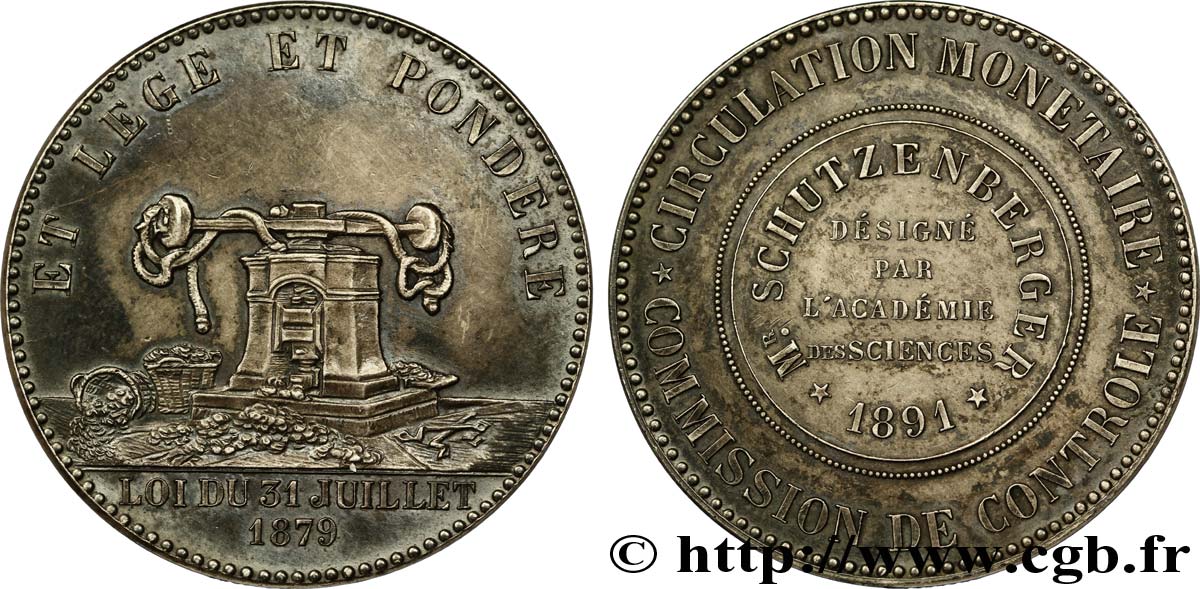
Titolatura diritto : ET LEGE ET PONDERE ; À L'EXERGUE : LOI DU 31 JUILLET 1879.
Descrittivo diritto : Balancier monétaire. Auprès de la base, une corbeille remplie de monnaies.
Traduzione diritto : Et par la Loi et par le poids.
Rovescio
Titolatura rovescio : COMMISSION DE CONTROLE - CIRCULATION MONETAIRE DANS LE CERCLE EXTÉRIEUR / MR SCHUTZENBERGER DÉSIGNÉ PAR L’ACADÉMIE DES SCIENCES.
Commento
C’est bien entendu le jeton classique de la Monnaie de Paris avec le balancier monétaire qui a servi pour fabriquer ce jeton mais pour le revers il faut noter la disposition en cercle avec le titre générique à l’extérieur et les informations spécifiques à l’intérieur. C’est une disposition qui permet à partir d’un seul coin de frapper plusieurs variétés de jetons en changeant le centre et cela nous fait penser que ce jeton aura servi de jeton d’identification pour les membres de la commission et donc que chacun est unique.
On peut comprendre que la Monnaie ait mis les petits coins dans les grands pour les membres de la Commission chargée de contrôler son efficacité.
Concernant le personnage , il s’agit certainement du découvreur de l’acétate https://fr.wikipedia.org/wiki/Paul_Sch%C3%BCtzenberger
Époque étrange où l’on pouvait avoir tant de titres éminents dans tant de domaines différents !.
It is of course the classic token of the Monnaie de Paris with the monetary balance which was used to manufacture this token but for the reverse it is necessary to note the arrangement in circle with the generic title on the outside and the specific information on the inside. It is an arrangement which allows from a single die to strike several varieties of tokens by changing the center and this makes us think that this token will have served as an identification token for the members of the commission and therefore that each one is unique. We can understand that the Mint put the small coins in the large ones for the members of the Commission responsible for controlling its effectiveness. Concerning the character, it is certainly the discoverer of acetate https://fr.wikipedia.org/wiki/Paul_Sch%C3%BCtzenberger Strange time where one could have so many eminent titles in so many different fields!
On peut comprendre que la Monnaie ait mis les petits coins dans les grands pour les membres de la Commission chargée de contrôler son efficacité.
Concernant le personnage , il s’agit certainement du découvreur de l’acétate https://fr.wikipedia.org/wiki/Paul_Sch%C3%BCtzenberger
Époque étrange où l’on pouvait avoir tant de titres éminents dans tant de domaines différents !.
It is of course the classic token of the Monnaie de Paris with the monetary balance which was used to manufacture this token but for the reverse it is necessary to note the arrangement in circle with the generic title on the outside and the specific information on the inside. It is an arrangement which allows from a single die to strike several varieties of tokens by changing the center and this makes us think that this token will have served as an identification token for the members of the commission and therefore that each one is unique. We can understand that the Mint put the small coins in the large ones for the members of the Commission responsible for controlling its effectiveness. Concerning the character, it is certainly the discoverer of acetate https://fr.wikipedia.org/wiki/Paul_Sch%C3%BCtzenberger Strange time where one could have so many eminent titles in so many different fields!
Cronistoria
MONNAIE DE PARIS
(XVI-XVIII secolo)
La Monnaie de Paris si trovava nel XVII secolo sul sito dell'attuale Samaritaine. La banca emittente si è formata dall'agglomerato di piccoli appezzamenti e case medievali che hanno dato a questo stabilimento un aspetto eterogeneo. Non lontano dalla sua ubicazione, dietro la chiesa di Saint-Germain-l'Auxerrois, si trova ancora la rue de l'Arbre sec, che ricorda che vi era stata istituita una forca per punire in particolare alcuni falsari. Le poche planimetrie settecentesche ci mostrano un susseguirsi di piccoli ambienti, di diverse dimensioni e posti su diversi livelli, alcuni dei quali vuoti perché avevano subito un incendio. Progetti di ristrutturazione furono proposti intorno al 1750 ma non furono immediatamente attuati. Dopo un contratto di scambio con un terreno situato intorno all'ex Hôtel de Conti, la Monnaie de Paris sarà trasferita nella sua sede attuale. La vecchia moneta sarà rasa al suolo durante la seconda metà del XVIII secolo.
 Segnalare un errore
 Stampate la pagina
 Condividi mia selezione
 Fai una domanda
 Consegnare / vendere
Articoli correlati
 Descrittivo


cgbfr.it numismatica


