


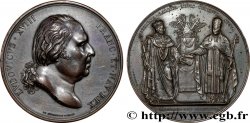
E-auction 287-207462 - fme_508165 - LUIGI XVIII Médaille de restauration du trône d’Espagne

Devi Sign-in ed essere un offerente approvato fare un'offerta, Login per fare offerte. Conti sono soggetti ad approvazione e di approvazione sono raggiunti entro 48 ore. Non aspettare fino al giorno di una vendita si chiude per registrarti.Confermando la tua offerta su questo oggetto ti impegni ad un contratto legalmente vincolante per l'acquisto di questo prodotto e fare clic su «offerta» costituisce accettazione dei termini di utilizzo de e-auctions cgb.fr.
Offerta deve essere collocato in euro gli importi interi vendita only.The si chiuderà al momento sulla descrizione dell'oggetto, eventuali offerte pervenute al sito dopo l'orario di chiusura non verranno eseguite. Volte transmition possono variare e le offerte potrebbero essere respinto se si attende per gli ultimi secondi. Per ulteriori informazioni ckeck le FAQ.
SENZA COSTI PER GLI ACQUIRENTI.
SENZA COSTI PER GLI ACQUIRENTI.
| Valutazione : | 120 € |
| Prezzo : | 62 € |
| Offerta maxima : | 77 € |
| Data di fine vendita : | 15 ottobre 2018 18:50:30 |
| partecipanti : | 7 partecipanti |
Tipo : Médaille de restauration du trône d’Espagne
Data: 1823
Nome della officina / città: Espagne
Metallo : rame
Diametro : 50,5 mm
Asse di coniazione : 12 h.
Incisore GAYRARD Raymond (1777-1858)
Peso : 64,23 g.
Orlo : lisse
Marchio : sans poinçon
Commenti sullo stato di conservazione:
Patine marron hétérogène. Traces de manipulation dans les champs. Présence de coups et rayures
N° nelle opere di riferimento :
Diritto
Titolatura diritto : LVDOVICVS. XVIII. FRANC. ET. NAV. REX..
Descrittivo diritto : Tête de Louis XVIII à droite, signé : GAYRARD F..
Rovescio
Titolatura rovescio : ARMIS GALLIAE - VIRTUTE - DUCIS // A FURORE REBELLIONIS / HISPANIA LIBERATA.
Descrittivo rovescio : Guerrier debout vêtu à l'antique brandissant le glaive, le bouclier timbré de trois lys, repoussant l'ennemi vers la mer ; à gauche, l'Espagne assise retenant deux enfants, à ses pieds un bouclier timbré aux armes de Castille et de Léon. Signé : GAYRARD F..
Commento
Médaille signe GAYRARD F. Paul Joseph Raymond Gayrard, dit Raymond Gayrard, né le 3 septembre 1807 à Clermont-Ferrand (Puy-de-Dôme) et mort en 1855 à Enghien-les-Bains (Val-d'Oise), est un sculpteur et graveur-médailleur français.
Raymond Gayrard étudie à un âge précoce avec son père Raymond Gayrard, sculpteur-graveur, (Rodez, 25 octobre 1777-1858)1. Il est l'élève de François Rude et David d'Angers. Il expose au salon de Paris en 1827 et poursuit ses expositions sa vie durant. En 1834 il obtient la deuxième place au concours et la médaille de première classe en 1846 et 1848. Il expose pour la dernière fois en 1855. Apprécié de la haute société française, il exécute beaucoup de bustes de personnalités contemporaines. Il est est également sculpteur animalier.
La restauration absolutiste en Espagne est la période de l'histoire d'Espagne s'étendant entre 1814 et 1833, au cours de laquelle le pays connaît un rétablissement de la monarchie absolue des Bourbons.
Après la guerre d'indépendance contre l'occupant français, les Cortès se réunissent à Madrid en octobre 1813. Peu après, Napoléon reconnaît Ferdinand VII comme roi d'Espagne par le traité de Valençay. Fort du soutien de la majeure partie de la population espagnole, celui-ci rentre dans sa capitale, le 22 mars 1814, par le chemin de Valence. Il reçoit alors, de la main d'un groupe de fidèles de la monarchie, le manifeste des Perses, une déclaration favorable à une restauration absolutiste.
Début 1823, la Sainte Alliance décide d'intervenir en Espagne, ainsi qu'elle l'a déjà fait à Naples et au Piémont. Le 22 janvier un traité secret est signé qui permet à la France d'envahir l'Espagne pour rétablir Ferdinand VII en monarque absolu.
.
Medal signed GAYRARD F. Paul Joseph Raymond Gayrard, known as Raymond Gayrard, born on September 3, 1807 in Clermont-Ferrand (Puy-de-Dôme) and died in 1855 in Enghien-les-Bains (Val-d'Oise), was a French sculptor and engraver-medalist.
Raymond Gayrard studied at an early age with his father Raymond Gayrard, sculptor-engraver, (Rodez, October 25, 1777-1858)1. He was a student of François Rude and David d'Angers.. He exhibited at the Paris Salon in 1827 and continued to exhibit throughout his life.. In 1834 he obtained second place in the competition and the first class medal in 1846 and 1848.. He exhibited for the last time in 1855. Appreciated by French high society, he executed many busts of contemporary personalities. He is also an animal sculptor.
The Absolutist Restoration in Spain was the period in Spanish history between 1814 and 1833, during which the country experienced a reestablishment of the absolute Bourbon monarchy..
After the war of independence against the French occupiers, the Cortes met in Madrid in October 1813.. Shortly after, Napoleon recognized Ferdinand VII as King of Spain by the Treaty of Valençay. With the support of the majority of the Spanish population, he returned to his capital on March 22, 1814, via Valencia.. He then received, from the hand of a group of loyalists of the monarchy, the manifesto of the Persians, a declaration in favor of an absolutist restoration.
At the beginning of 1823, the Holy Alliance decided to intervene in Spain, as it had already done in Naples and Piedmont.. On January 22, a secret treaty was signed that allowed France to invade Spain and reinstate Ferdinand VII as absolute monarch..
Cronistoria
LUIGI XVIII
(06/04/1814-16/09/1824)
Louis-Stanislas-Xavier nacque a Versailles nel 1755 dall'unione di Dauphin Louis (figlio di Luigi XV) e Marie-Josèphe Louise de Savoie. Ricevette per la prima volta il titolo di Conte di Provenza e fu chiamato Monsieur quando suo fratello maggiore, Luigi XVI, divenne re nel 1774.. Sposato con Louise Marie-Joséphine de Savoie nel 1771, non ebbe figli. Spesso in opposizione alla Corte, inizialmente non condannò il movimento del 1789 ma l'evolversi degli eventi lo decise a lasciare Parigi in compagnia della moglie, il giorno stesso della fuga di Luigi XVI a Varennes, ma per altra via. Rifugiatosi a Coblenza presso il fratello, il conte d'Artois, assunse il titolo di reggente dopo l'esecuzione di Luigi XVI poi, alla morte del nipote Luigi XVII, quello di re. Iniziò a lavorare al restauro nonostante il debole appoggio a sua disposizione e dovette cambiare più volte residenza di fronte alle vittorie della Rivoluzione e di Bonaparte.. Con il Primo Impero, la causa monarchica sembrava senza speranza e Luigi XVIII si stabilì in Inghilterra in un periodo di esilio e imbarazzo finanziario.. Durante le prime sconfitte di Napoleone I, Luigi XVIII riprese la sua attività diplomatica che, su iniziativa di Talleyrand e grazie all'appoggio inglese, gli permise di rientrare in Francia nel maggio 1814.. Costretto a fuggire a Gand durante i Cento giorni, Luigi XVIII, durante la seconda Restaurazione, cercò di attuare la stessa politica di riconciliazione definita al suo primo ritorno in Francia.. Dopo il terrore bianco (esecuzione del maresciallo Ney), il regime si è ammorbidito e si è addormentato. Il duca Decazes sostituisce Richelieu dal 1818. Nonostante le pressioni monarchiche, Luigi XVIII sostenne con forza la politica moderata di Decazes nei primi anni. La Francia viene reintegrata nel concerto delle Nazioni dopo il Congresso di Aix-la-Chapelle. Le forze di occupazione lasciano la Francia. La legge sulla censura viene allentata nel 1819. Quell'anno, Géricault presentò la Zattera della Medusa. La politica di conciliazione cessa dopo l'assassinio del duca di Berry il 13 febbraio 1820 da parte di Louvel. Travolto dalla reazione degli ultras dopo questo assassinio, Decazes si dimise il 20 febbraio e il duca di Richelieu fu richiamato, segnando così il trionfo della destra per la fine del regno e per quello successivo.. Il figlio del miracolo, Henri, duca di Bordeaux, figlio postumo di Carlo duca di Berry e di Maria Carolina di Borbone, nacque il 29 settembre 1820. Napoleone I morì a Sant'Elena il 5 maggio 1821.. Villele sostituisce Richelieu il 14 dicembre 1821. La fine del regno è segnata dalla spedizione in Spagna, comandata dal duca di Angoulême, organizzata per restaurare Ferdinando VII, cacciato dai liberali. I francesi presero Madrid il 23 maggio, Fort Trocadéro il 31 agosto e Cadice il 30 settembre 1823.. Luigi XVIII, malato e storpio (gotta), morì il 16 settembre 1824. Viene sepolto a Saint-Denis il 23 settembre.
 Segnalare un errore
 Stampate la pagina
 Condividi mia selezione
 Fai una domanda
 Consegnare / vendere
Articoli correlati

 Descrittivo


Articoli visualizzati di recente

TERZA REPUBBLICA FRANCESE Médaille de la ville d’Auxerre q.SPL
12.00 €
cgbfr.it numismatica


