


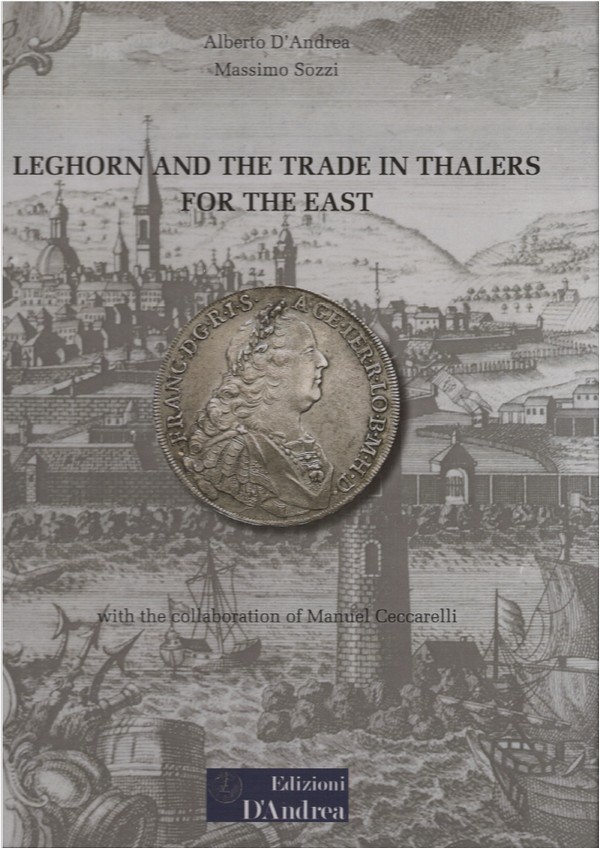
ll34 - Leghorn and the trade in thalers for the East D'ANDREA Alberto, SOZZI Massimo, CECARELLI Manuel
60.00 €
Quantità
Aggiungi al carrello

Autore : D'ANDREA Alberto, SOZZI Massimo, CECARELLI Manuel
Editore : Edizioni d'Andrea
Lingua : Anglais-Italien
Caratteristiche : Roseto degli Abruzzi 2026, broché, (22 x 32 cm), 184 pages, illustrations en couleur
Peso : 1200 g.
Commento
This previously unpublished dossier, concerning the project to mint thalers for the Levant (1760–1761) – studied and presented for the first time in this volume – documents the Grand Duchy of Tuscany’s plan, under Francis Stephen of Lorraine, to produce a ‘commodity currency’ intended exclusively for trade with the East. The document serves as a manual of ‘economic intelligence’, compiling secret correspondence, technical analyses and statistical data on the markets of Smyrna, Alexandria, Constantinople and other ports of the Levant.
The Tuscan thaler (or “tollero”) was designed to resolve the trade imbalance with the Ottoman Empire, serving as a hard currency for the purchase of primary goods such as wheat. Thanks to its stable weight and fineness, it succeeded in replacing the inferior Spanish coins (“maltagliate”) previously in use.
A key element of its success was the coin’s appearance: Eastern merchants based their trust on the image of Empress Maria Theresa and on the coin’s ‘mole’ (dimensions and weight), preferring specific iconographic representations and rejecting unwelcome imperial or religious symbols.
The free port of Livorno was at the heart of the operation. As a neutral port open to all nations, it facilitated trade between the Tuscan economy and Turkish merchants, with fluctuations in the value of the thaler linked mainly to the need for food imports during famines
Il dossier inedito, sul progetto di coniazione dei talleri per il Levante (1760-1761), e per la prima volta studiato e presentato in questo volume, documenta il piano del Granducato di Toscana, sotto Francesco Stefano di Lorena, per produrre una “moneta-merce” dedicata esclusivamente ai traffici con l’Oriente. Il documento funge da manuale di “intelligence economica”, raccogliendo corrispondenza segreta, analisi tecniche e dati statistici sui mercati di Smirne, Alessandria, Costantinopoli e altri porti del Levante.
Il tallero toscano (o “tollero”) fu ideato per risolvere lo squilibrio commerciale con l’Impero Ottomano, fungendo da valuta forte per l’acquisto di beni primari come il grano. Grazie alla sua stabilità di peso e titolo, riuscì a sostituire le scadenti monete spagnole (“maltagliate”) precedentemente in uso.
Un elemento chiave del suo successo era l’aspetto della moneta: i mercanti orientali basavano la propria fiducia sull’immagine dell’Imperatrice Maria Teresa e sulla “mole” (dimensioni e peso) dell’esemplare, preferendo specifiche rappresentazioni iconografiche e rifiutando simboli imperiali o religiosi non graditi.
Il porto franco di Livorno rappresentò il cuore dell’operazione. In quanto scalo neutrale e aperto a tutte le nazioni, permetteva lo scambio agevolato tra l’economia toscana e i mercanti turchi, con fluttuazioni di valore del tallero legate principalmente alle necessità di importazione alimentare durante le carestie.
This previously unpublished dossier, concerning the project to mint thalers for the Levant (1760–1761) – studied and presented for the first time in this volume – documents the Grand Duchy of Tuscany's plan, under Francis Stephen of Lorraine, to produce a 'commodity currency' intended exclusively for trade with the East. The document serves as a manual of 'economic intelligence', compiling secret technical correspondence, analyzes and statistical data on the markets of Smyrna, Alexandria, Constantinople and other ports of the Levant.
The Tuscan thaler (or “tollero”) was designed to resolve the trade imbalance with the Ottoman Empire, serving as a hard currency for the purchase of primary goods such as wheat. Thanks to its stable weight and fineness, it succeeded in replacing the inferior Spanish coins (“maltaglicate”) previously in use.
A key element of its success was the coin's appearance: Eastern merchants based their trust on the image of Empress Maria Theresa and on the coin's 'mole' (dimensions and weight), preferring specific iconographic representations and rejecting unwelcome imperial or religious symbols.
The free port of Livorno was at the heart of the operation. As a neutral port open to all nations, it facilitated trade between the Tuscan economy and Turkish merchants, with fluctuations in the value of the thaler linked mainly to the need for food imports during famines. under Francesco Stefano di Lorena, for producing a “moneta-merce” dedicated exclusively to traffic in the Orient. This document functions in the “economic intelligence” manual, which corresponds to its segments, technical analysis and statistical data on the market in Smirne, Alessandria, Costantinopoli and other ports of the Levante..
Il tallero toscano (or “tollero”) was the idea to solve the commercial balance with the Ottoman Emperor, fungendo da valuta forte per l'acquisto di beni primari comme il grano. Grazie la sua stability de peso et titolo, reuscì a substituter le scadenti monete espagnole (“maltagliate”) previously in uso.
A key element of its successor will be the coinage: the oriental merchandise is based on the ownership of the image of the Empress Maria Teresa and the “mole” (dimension and weight) of the sample, preferring specific representations of icons and rich symbols of imperialism or non-gradient religion..
Il porto franco di Livorno presents the heart of the operation. At the same time neutral and aperto all the nazioni, permitteva lo scambio avolato tra l'economia tuscana e mercanti chichi, con fluttuazioni di valore del tallero legate principalmente le necessità di importazione alimentare dans le alimentaire
The Tuscan thaler (or “tollero”) was designed to resolve the trade imbalance with the Ottoman Empire, serving as a hard currency for the purchase of primary goods such as wheat. Thanks to its stable weight and fineness, it succeeded in replacing the inferior Spanish coins (“maltagliate”) previously in use.
A key element of its success was the coin’s appearance: Eastern merchants based their trust on the image of Empress Maria Theresa and on the coin’s ‘mole’ (dimensions and weight), preferring specific iconographic representations and rejecting unwelcome imperial or religious symbols.
The free port of Livorno was at the heart of the operation. As a neutral port open to all nations, it facilitated trade between the Tuscan economy and Turkish merchants, with fluctuations in the value of the thaler linked mainly to the need for food imports during famines
Il dossier inedito, sul progetto di coniazione dei talleri per il Levante (1760-1761), e per la prima volta studiato e presentato in questo volume, documenta il piano del Granducato di Toscana, sotto Francesco Stefano di Lorena, per produrre una “moneta-merce” dedicata esclusivamente ai traffici con l’Oriente. Il documento funge da manuale di “intelligence economica”, raccogliendo corrispondenza segreta, analisi tecniche e dati statistici sui mercati di Smirne, Alessandria, Costantinopoli e altri porti del Levante.
Il tallero toscano (o “tollero”) fu ideato per risolvere lo squilibrio commerciale con l’Impero Ottomano, fungendo da valuta forte per l’acquisto di beni primari come il grano. Grazie alla sua stabilità di peso e titolo, riuscì a sostituire le scadenti monete spagnole (“maltagliate”) precedentemente in uso.
Un elemento chiave del suo successo era l’aspetto della moneta: i mercanti orientali basavano la propria fiducia sull’immagine dell’Imperatrice Maria Teresa e sulla “mole” (dimensioni e peso) dell’esemplare, preferendo specifiche rappresentazioni iconografiche e rifiutando simboli imperiali o religiosi non graditi.
Il porto franco di Livorno rappresentò il cuore dell’operazione. In quanto scalo neutrale e aperto a tutte le nazioni, permetteva lo scambio agevolato tra l’economia toscana e i mercanti turchi, con fluttuazioni di valore del tallero legate principalmente alle necessità di importazione alimentare durante le carestie.
This previously unpublished dossier, concerning the project to mint thalers for the Levant (1760–1761) – studied and presented for the first time in this volume – documents the Grand Duchy of Tuscany's plan, under Francis Stephen of Lorraine, to produce a 'commodity currency' intended exclusively for trade with the East. The document serves as a manual of 'economic intelligence', compiling secret technical correspondence, analyzes and statistical data on the markets of Smyrna, Alexandria, Constantinople and other ports of the Levant.
The Tuscan thaler (or “tollero”) was designed to resolve the trade imbalance with the Ottoman Empire, serving as a hard currency for the purchase of primary goods such as wheat. Thanks to its stable weight and fineness, it succeeded in replacing the inferior Spanish coins (“maltaglicate”) previously in use.
A key element of its success was the coin's appearance: Eastern merchants based their trust on the image of Empress Maria Theresa and on the coin's 'mole' (dimensions and weight), preferring specific iconographic representations and rejecting unwelcome imperial or religious symbols.
The free port of Livorno was at the heart of the operation. As a neutral port open to all nations, it facilitated trade between the Tuscan economy and Turkish merchants, with fluctuations in the value of the thaler linked mainly to the need for food imports during famines. under Francesco Stefano di Lorena, for producing a “moneta-merce” dedicated exclusively to traffic in the Orient. This document functions in the “economic intelligence” manual, which corresponds to its segments, technical analysis and statistical data on the market in Smirne, Alessandria, Costantinopoli and other ports of the Levante..
Il tallero toscano (or “tollero”) was the idea to solve the commercial balance with the Ottoman Emperor, fungendo da valuta forte per l'acquisto di beni primari comme il grano. Grazie la sua stability de peso et titolo, reuscì a substituter le scadenti monete espagnole (“maltagliate”) previously in uso.
A key element of its successor will be the coinage: the oriental merchandise is based on the ownership of the image of the Empress Maria Teresa and the “mole” (dimension and weight) of the sample, preferring specific representations of icons and rich symbols of imperialism or non-gradient religion..
Il porto franco di Livorno presents the heart of the operation. At the same time neutral and aperto all the nazioni, permitteva lo scambio avolato tra l'economia tuscana e mercanti chichi, con fluttuazioni di valore del tallero legate principalmente le necessità di importazione alimentare dans le alimentaire
 Segnalare un errore
 Stampate la pagina
 Condividi mia selezione
 Fai una domanda
Articoli visualizzati di recente
SANTONES (Area of Saintes) Lot de 7 bronzes CONTOVTOS (quadrans) lotto
51.00 €
Ambres gravés du département des Monnaies, Médailles et Antiques D'ERCOLE Mar
36.00 €
Catalogue des monnaies régionales - Dole - types, variantes, rareté, prix- éd
16.00 €
Héraldique et numismatique II - Moyen âge - Temps modernes sous la direction d
27.00 €
Le papier-monnaie de sièges et de campagnes de l'armée française KOLSKY Mauri
60.00 €
cgbfr.it numismatica


