


E-auction 34-12572 - fjt_211308 - PARIS - ILE DE FRANCE Daniel Fillau, secrétaire particulier de Monseigneur 1611

Devi Sign-in ed essere un offerente approvato fare un'offerta, Login per fare offerte. Conti sono soggetti ad approvazione e di approvazione sono raggiunti entro 48 ore. Non aspettare fino al giorno di una vendita si chiude per registrarti.Confermando la tua offerta su questo oggetto ti impegni ad un contratto legalmente vincolante per l'acquisto di questo prodotto e fare clic su «offerta» costituisce accettazione dei termini di utilizzo de e-auctions cgb.fr.
Offerta deve essere collocato in euro gli importi interi vendita only.The si chiuderà al momento sulla descrizione dell'oggetto, eventuali offerte pervenute al sito dopo l'orario di chiusura non verranno eseguite. Volte transmition possono variare e le offerte potrebbero essere respinto se si attende per gli ultimi secondi. Per ulteriori informazioni ckeck le FAQ.
SENZA COSTI PER GLI ACQUIRENTI.
SENZA COSTI PER GLI ACQUIRENTI.
| Valutazione : | 75 € |
| Prezzo : | 11 € |
| Offerta maxima : | 15 € |
| Data di fine vendita : | 09 dicembre 2013 18:33:00 |
| partecipanti : | 3 partecipanti |
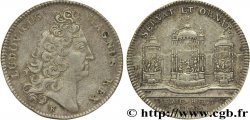
Tipo : Daniel Fillau, secrétaire particulier de Monseigneur
Data: 1611
Metallo : ottone
Diametro : 27,7 mm
Asse di coniazione : 6 h.
Orlo : lisse
Grado di rarità : R2
N° nelle opere di riferimento :
Diritto
Titolatura diritto : DANIEL FILLAV SECRET D MONSEIG LE PRI.
Descrittivo diritto : Armes de Daniel Fillau.
Rovescio
Titolatura rovescio : (ANTEROS EN GREC) ; À L'EXERGUE : 1611.
Descrittivo rovescio : Deux torches liées avec des lacs d'amour.
Commento
La devise et l’âme du revers, voir http://fr.wikipedia.org/wiki/Ant%C3%A9ros laissent perplexe sur la notion de secrétariat : “Le terme d’« antéros » se retrouve également dans le Phèdre de Platon, lorsque Socrate prononce son second discours sur l'amour où, parlant du sentiment naissant qu'un jeune garçon (éromène) éprouve pour un éraste, il décrit :
« Mais, tout comme celui qui de quelque autre a pris une ophtalmie est hors d'état de prétexter une cause à son mal, lui, il ne se doute pas qu'en celui qui l'aime, c'est lui-même qu'il voit, comme en un miroir : en sa présence, la cessation de ses souffrances se confond avec la cessation des souffrances de l'autre ; en son absence, le regret qu'il éprouve et celui qu'il inspire se confondent encore : en possession d'un contre-amour (antéros) qui est une image réfléchie d'amour. »
(255d, trad. Léon Robin).
The motto and soul of the reverse, see http://fr.wikipedia.org/wiki/Ant%C3%A9ros leave one perplexed about the notion of secretarial work: “The term “anteros” is also found in Plato’s Phaedrus, when Socrates delivers his second speech on love where, speaking of the nascent feeling that a young boy (eromenos) feels for an erastes, he describes: “But, just as someone who has taken an ophthalmia from someone else is unable to pretend a cause for his illness, he does not suspect that in the one who loves him, it is himself that he sees, as in a mirror: in his presence, the cessation of his sufferings merges with the cessation of the sufferings of the other; in his absence, the regret he feels and that which he inspires merge again: in possession of a counter-love (anteros) which is a reflected image of love.” (255d, trans. Léon Robin)
« Mais, tout comme celui qui de quelque autre a pris une ophtalmie est hors d'état de prétexter une cause à son mal, lui, il ne se doute pas qu'en celui qui l'aime, c'est lui-même qu'il voit, comme en un miroir : en sa présence, la cessation de ses souffrances se confond avec la cessation des souffrances de l'autre ; en son absence, le regret qu'il éprouve et celui qu'il inspire se confondent encore : en possession d'un contre-amour (antéros) qui est une image réfléchie d'amour. »
(255d, trad. Léon Robin).
The motto and soul of the reverse, see http://fr.wikipedia.org/wiki/Ant%C3%A9ros leave one perplexed about the notion of secretarial work: “The term “anteros” is also found in Plato’s Phaedrus, when Socrates delivers his second speech on love where, speaking of the nascent feeling that a young boy (eromenos) feels for an erastes, he describes: “But, just as someone who has taken an ophthalmia from someone else is unable to pretend a cause for his illness, he does not suspect that in the one who loves him, it is himself that he sees, as in a mirror: in his presence, the cessation of his sufferings merges with the cessation of the sufferings of the other; in his absence, the regret he feels and that which he inspires merge again: in possession of a counter-love (anteros) which is a reflected image of love.” (255d, trans. Léon Robin)
Cronistoria
PARIS - ILE DE FRANCE
 Segnalare un errore
 Stampate la pagina
 Condividi mia selezione
 Fai una domanda
 Consegnare / vendere
Articoli correlati
 Descrittivo




Articoli visualizzati di recente
100 Francs DELACROIX imprimé en continu FRANCIA 1991 F.69bis.03b2 FDC
19.00 €
3 Livres FRANCE regionalismo e varie Tours 1792 Kc.37.029 BB
105.00 €
100 Francs DELACROIX imprimé en continu FRANCIA 1991 F.69bis.04a FDC
97.00 €
LOUIS XV "THE WELL-BELOVED" Écu aux branches d’olivier, tête ceinte d’un b
695.00 €
ITALIA - STATO PONTIFICIO - BENEDETTO XIV (Prospero Lambertini) Demi-Écu (Mezzo
180.00 €

Catalogue des Sceaux, Camées et Bulles Sassanides - Tome 2 : les sceaux et bull
56.41 €
cgbfr.it numismatica


