


E-auction 333-248707 - fme_412525 - HENRY III Médaille, Alexandre (Henri III) franchissant le Tigre, refrappe

Devi Sign-in ed essere un offerente approvato fare un'offerta, Login per fare offerte. Conti sono soggetti ad approvazione e di approvazione sono raggiunti entro 48 ore. Non aspettare fino al giorno di una vendita si chiude per registrarti.Confermando la tua offerta su questo oggetto ti impegni ad un contratto legalmente vincolante per l'acquisto di questo prodotto e fare clic su «offerta» costituisce accettazione dei termini di utilizzo de e-auctions cgb.fr.
Offerta deve essere collocato in euro gli importi interi vendita only.The si chiuderà al momento sulla descrizione dell'oggetto, eventuali offerte pervenute al sito dopo l'orario di chiusura non verranno eseguite. Volte transmition possono variare e le offerte potrebbero essere respinto se si attende per gli ultimi secondi. Per ulteriori informazioni ckeck le FAQ.
SENZA COSTI PER GLI ACQUIRENTI.
SENZA COSTI PER GLI ACQUIRENTI.
| Valutazione : | 100 € |
| Prezzo : | 31 € |
| Offerta maxima : | 48 € |
| Data di fine vendita : | 02 settembre 2019 18:12:30 |
| partecipanti : | 4 partecipanti |
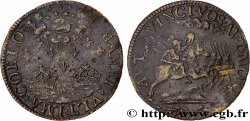
Tipo : Médaille, Alexandre (Henri III) franchissant le Tigre, refrappe
Data: (1579)
Nome della officina / città: France
Metallo : bronzo
Diametro : 43 mm
Asse di coniazione : 12 h.
Incisore PILON Germain - DE HERY Claude
Peso : 38 g.
Orlo : lisse + corne BRONZE
Commenti sullo stato di conservazione:
Superbe médaille moderne avec une agréable patine
Diritto
Titolatura diritto : HENRICVS III D G FRANCORVM ET POL REX.
Descrittivo diritto : Buste lauré, drapé et cuirassé d’Henri II à droite.
Rovescio
Titolatura rovescio : IMAGO TALIS ALEXADRI TIGRIN SVPERANTIS.
Descrittivo rovescio : Le roi paradant à cheval à gauche.
Commento
Refrappe avec le poinçon corne, d’après 1880, sans signature de graveur mais dont l’original est attribué à Claude de Hery et Germain Pilon. Ce revers a aussi été utilisé associé à un avers au type et au nom de Louise de Lorraine.
Claude de Héry est un maître orfèvre à Paris, tailleur et graveur général des monnaies de France, et mort à Paris en mars 1582.
Germain Pilon, né vers 1528 à Paris et mort en 1590 dans la même ville, est l'un des plus importants sculpteurs de la Renaissance française. Il a été le sculpteur des tombes des rois français du XVIe siècle. Nommé contrôleur des Poinçons et Monnaies du roi, il apprend également l'art de la fonte et du ciselage du bronze. De 1558 à sa mort, il travaille pour la Cour de France, réalisant les monuments funéraires de François Ier et d'Henri II, les gisants de ce dernier et de Catherine de Médicis, ainsi que les monnaies royales, la statuaire de la chasse de Sainte Geneviève. Il est également un sculpteur apprécié de l'aristocratie française, là encore spécialisé dans l'art funéraire. Dans son atelier travaillent ses fils, ainsi que Mathieu Jacquet, lesquels assurent le succès du style de Pilon sur plusieurs décennies.
Re-struck with the horn punch, after 1880, without engraver's signature but the original is attributed to Claude de Hery and Germain Pilon. This reverse was also used in association with an obverse bearing the type and name of Louise de Lorraine.
Claude de Héry was a master goldsmith in Paris, cutter and general engraver of French coins, and died in Paris in March 1582.
Germain Pilon, born around 1528 in Paris and died in 1590 in the same city, is one of the most important sculptors of the French Renaissance. He was the sculptor of the tombs of the French kings of the 16th century. Appointed controller of the King's Hallmarks and Coins, he also learned the art of casting and chiseling bronze.. From 1558 until his death, he worked for the Court of France, creating the funerary monuments of Francis I and Henry II, the recumbent statues of the latter and Catherine de Medici, as well as the royal coins, the statuary of the hunt of Saint Genevieve. He was also a sculptor appreciated by the French aristocracy, again specializing in funerary art.. In his workshop, his sons and Mathieu Jacquet worked, ensuring the success of Pilon's style over several decades.
Claude de Héry est un maître orfèvre à Paris, tailleur et graveur général des monnaies de France, et mort à Paris en mars 1582.
Germain Pilon, né vers 1528 à Paris et mort en 1590 dans la même ville, est l'un des plus importants sculpteurs de la Renaissance française. Il a été le sculpteur des tombes des rois français du XVIe siècle. Nommé contrôleur des Poinçons et Monnaies du roi, il apprend également l'art de la fonte et du ciselage du bronze. De 1558 à sa mort, il travaille pour la Cour de France, réalisant les monuments funéraires de François Ier et d'Henri II, les gisants de ce dernier et de Catherine de Médicis, ainsi que les monnaies royales, la statuaire de la chasse de Sainte Geneviève. Il est également un sculpteur apprécié de l'aristocratie française, là encore spécialisé dans l'art funéraire. Dans son atelier travaillent ses fils, ainsi que Mathieu Jacquet, lesquels assurent le succès du style de Pilon sur plusieurs décennies.
Re-struck with the horn punch, after 1880, without engraver's signature but the original is attributed to Claude de Hery and Germain Pilon. This reverse was also used in association with an obverse bearing the type and name of Louise de Lorraine.
Claude de Héry was a master goldsmith in Paris, cutter and general engraver of French coins, and died in Paris in March 1582.
Germain Pilon, born around 1528 in Paris and died in 1590 in the same city, is one of the most important sculptors of the French Renaissance. He was the sculptor of the tombs of the French kings of the 16th century. Appointed controller of the King's Hallmarks and Coins, he also learned the art of casting and chiseling bronze.. From 1558 until his death, he worked for the Court of France, creating the funerary monuments of Francis I and Henry II, the recumbent statues of the latter and Catherine de Medici, as well as the royal coins, the statuary of the hunt of Saint Genevieve. He was also a sculptor appreciated by the French aristocracy, again specializing in funerary art.. In his workshop, his sons and Mathieu Jacquet worked, ensuring the success of Pilon's style over several decades.
Cronistoria
HENRY III
(30/05/1574-02/08/1589)
Nato a Fontainebleau nel 1551, Enrico III era il quarto figlio di Enrico II e Caterina de' Medici. Primo duca d'Angiò, si distinse per i suoi successi militari contro gli ugonotti e fu scelto nel 1573 come re dai polacchi per sostituire l'ultimo degli Jagelloni.. Nel giugno 1574, mentre Caterina de Medici era a capo della reggenza, Enrico III fuggì dalla Polonia. Passò per Venezia per tornare in Francia. In Francia Caterina era molto impopolare, a causa dei favori che piovevano sulle sue creature italiane (Strozzi, Gonzague, Birague, Gondi). Il re e sua madre si incontrarono a Lione e riformarono il governo. Il consiglio era in numero limitato: era ridotto alla regina madre, Birague e Cheverny. I poteri dei Segretari di Stato furono ridotti. Sacro a Reims, dopo aver sposato Louise de Vaudémont, Enrico III cercò di calmare la guerra civile. A corte, il partito del re si scontrò con quello di suo fratello, il duca di Alençon.. Nel settembre 1575 Alençon fuggì e si mise a capo del partito protestante. Nel maggio 1576, Enrico III dovette firmare l'editto di pacificazione di Beaulieu o pace di Monsieur. Riabilitate le vittime di Saint Barthélemy, culto protestante autorizzato ovunque fuori Parigi e nelle residenze di corte. Ai protestanti furono concessi otto luoghi di sicurezza e camere di giustizia semipartitiche. Damville mantenne il governo della Linguadoca e il duca di Alençon ricevette in appannaggio Anjou, Touraine e Berry. Il re di Navarra, tornato nei suoi Stati, abiurò la religione cattolica. Il partito cattolico era scontento di questa pace. Una prima lega cattolica fu creata dai Sieur d'Humières a Péronne, la Piccardia si rifiutò di ricevere Condé come governatore. Ben presto Enrico di Guisa estese questa Lega a tutto il regno, con il programma della restaurazione del potere regio e la riunione degli Stati Generali.. Per contrastare i Balafré, Enrico III si dichiarò capo della Lega. Gli Stati Generali si riunirono a Blois nel novembre 1576, senza rappresentanza protestante. Essendosi dichiarati gli Stati per l'unità di religione, i protestanti ripresero le armi. Gli Stati affermarono anche di stabilire il controllo del governo e rifiutarono a Enrico III i sussidi che chiedeva.. Caterina si unì a Damville e al duca di Alençon, che divenne duca d'Angiò, presunto erede. Dopo alcuni successi cattolici, fu firmata una nuova pace: fu l'Editto di Poitiers del settembre 1577, che pose alcune restrizioni all'Editto di Beaulieu.. La guerra riprese nel 1580 con la presa di Cahors da parte del re di Navarra: fu breve, i protestanti aspirarono alla pace, che si concluse a Fleix nel novembre 1580. Il duca d'Angiò portò le sue ambizioni all'estero, cercando di sposare Elisabetta d'Inghilterra poi morì davanti ad Anversa, che cercò di impadronirsi (giugno 1584). Circondato da tirapiedi e favoriti, Enrico III cercò di rafforzare il potere reale raggruppando i suoi fedeli attorno a un trono di cui voleva elevare il prestigio: questo è il significato dell'elevazione dei suoi favoriti, Épernon e Joyeuse, del rafforzamento del galateo e la fondazione, nel 1578, dell'Ordine dello Spirito Santo. Grande legislatore, organizzò il Concilio ma, molto spendaccione, fallì nella riforma finanziaria. Dopo la morte del duca d'Angiò, Henri de Navarre era diventato l'erede presunto. Enrico III non aveva figli, era screditato. I Guisa si mobilitarono dietro la candidatura del cardinale di Borbone e il sostegno segreto di Filippo III e di papa Sisto V.. La Lega Santa fu formata dal Trattato di Joinville (dicembre 1584). Si formò una lega parigina, dove entrarono borghesi e parlamentari. Elboeuf, Aumale e Mercœur hanno innalzato la provincia. Di fronte a questa pressione, il re dovette firmare, il 18 luglio 1585, un editto di proscrizione contro i protestanti.. Nel frattempo, il Papa ha dichiarato Enrico di Navarra privato dei suoi diritti al trono.. Nell'ottobre 1587, il duca di Joyeuse fu sconfitto e ucciso da Henri a Coutras. Ma l'esercito di soccorso inviato dai principi protestanti di Germania fu sconfitto dal duca di Guisa. Il 12 maggio 1588, trovandosi quest'ultimo a Parigi, la città insorse contro il re, che dovette fuggire. In luglio, Enrico III firmò un editto di unione (dei cattolici): l'eresia fu proibita; Navarre esclude dalla successione. Gli Stati Generali, convocati a Blois, videro il trionfo della Lega: il re rinnovò l'editto di unione e gli Stati gli rifiutarono ogni sussidio.. Per riprendere il controllo del potere, il re fece assassinare Guise (23 dicembre 1588) e suo fratello il cardinale de Guise (24 dicembre).. Le Tenute furono chiuse nel gennaio 1589. Parigi si ribellò apertamente contro il re e pose alla sua testa un Consiglio dei Sedici. Il duca di Mayenne, fratello di Guisa, governatore della Borgogna, arrivò a Parigi nel febbraio 1589 e fu nominato luogotenente generale del regno. Seguì la provincia. Enrico III aveva solo Delfinato, Bordeaux, Angers, Tours, Blois e Beaugency. Mayenne in marcia su Tours, il re dovette allearsi con Henri de Navarre. Ben presto Parigi fu assediata dai due sovrani. Fu allora che un monaco giacobino, Jacques Clément, assassinò Enrico III: fu il primo regicidio della storia della Francia.. Con Enrico III finì la dinastia dei Valois che governò la Francia dal 1328. La corona passò al suo lontano cugino Enrico di Navarra.
 Segnalare un errore
 Stampate la pagina
 Condividi mia selezione
 Fai una domanda
 Consegnare / vendere
Articoli correlati

 Descrittivo
Articoli visualizzati di recente

GALLIA SENONES (Regione di Sens) Potin à la tête “d’indien” q.BB/BB
28.00 €
MACEDONIA - REGNO DE MACEDONIA - FILIPPO III ARRIDAIOS Tétradrachme BB/q.BB
250.00 €

LOUIS XIV LE GRAND ou LE ROI SOLEIL Préliminaires de la Paix de Munster q.BB
4.00 €

10 francs Robert Schuman 1986 Pessac F.374/2 MS
20.00 €

TOURISTIC MEDALS Médaille touristique, Zoo de La Palmyre, Charente-Maritime SPL
3.00 €

GERMANIA 5 Reichspfennig aigle surmontant une swastika 1938 Berlin q.SPL
15.00 €
cgbfr.it numismatica


