


fjt_235047 - FRANC-MAÇONNERIE - PARIS LA CLÉMENTE AMITIÉ n.d.
non disponibile.
Articolo venduto sul nostro negozio (2010)
Prezzo : 90.00 €
Articolo venduto sul nostro negozio (2010)
Prezzo : 90.00 €
Tipo : LA CLÉMENTE AMITIÉ
Data: n.d.
Metallo : argento
Diametro : 27,5 mm
Asse di coniazione : 12 h.
Orlo : lisse
Grado di rarità : R1
N° nelle opere di riferimento :
Diritto
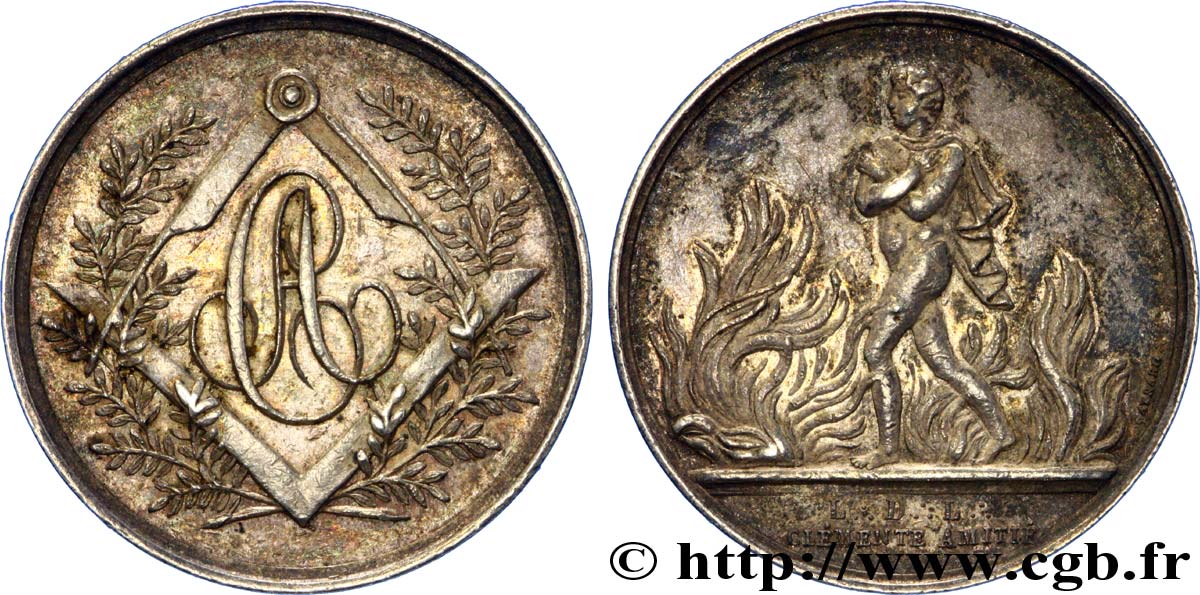
Titolatura diritto : L.:. D.:. L.:. CLÉMENTE AMITIÉ.
Descrittivo diritto : Personnage nu dans les flammes allant à gauche et s’en protégeant, une petite cape sur les épaules, signé GAYRARD.
Rovescio
Descrittivo rovescio : Compas et équerre entrecroisés sur une couronne ouverte d’acacia, au centre en monogramme CA.
Commento
Le symbolisme de l’avers nous reste énigmatique (ni nu, ni vêtu ?) ... Marc Labouret consacre un gros article à cette loge dont il n’hésite pas à dire qu’elle est l’une des plus importantes du XIXe siècle avec Victor Schoelcher, Camille Pelletan ou Eugène le Roy .
La franc-maçonnerie s’implante en France aux alentours du premier quart du XVIIIe s. sous l’influence d’aristocrates anglais. Initiatique, elle est fondée sur le rite hiramique, du nom d’Hiram de Tyr, personnage biblique, architecte du roi Salomon sur le chantier du Temple et qui a résisté à la torture sans livrer ses secrets. Hiram a aussi donné un point de départ du calendrier maçonnique commençant 4000 ans avant le calendrier chrétien. Les symboles servent de signes de reconnaissance entre les initiés, notamment des outils de constructeur de cathédrales (équerre, compas, niveau, maillet, etc.), des formes (triangle, étoile), des nombres (trois, cinq, sept) et des lettres.
The symbolism of the obverse remains enigmatic to us (neither naked nor clothed?) ... Marc Labouret devotes a large article to this lodge which he does not hesitate to say is one of the most important of the 19th century with Victor Schoelcher, Camille Pelletan or Eugène le Roy. Freemasonry was established in France around the first quarter of the 18th century under the influence of English aristocrats. Initiatory, it is based on the Hiramic rite, named after Hiram of Tyre, a biblical character, architect of King Solomon on the construction site of the Temple and who resisted torture without revealing his secrets. Hiram also gave a starting point for the Masonic calendar beginning 4000 years before the Christian calendar. Symbols serve as signs of recognition between initiates, including cathedral builder's tools (square, compass, level, mallet, etc.), shapes (triangle, star), numbers (three, five, seven) and letters
La franc-maçonnerie s’implante en France aux alentours du premier quart du XVIIIe s. sous l’influence d’aristocrates anglais. Initiatique, elle est fondée sur le rite hiramique, du nom d’Hiram de Tyr, personnage biblique, architecte du roi Salomon sur le chantier du Temple et qui a résisté à la torture sans livrer ses secrets. Hiram a aussi donné un point de départ du calendrier maçonnique commençant 4000 ans avant le calendrier chrétien. Les symboles servent de signes de reconnaissance entre les initiés, notamment des outils de constructeur de cathédrales (équerre, compas, niveau, maillet, etc.), des formes (triangle, étoile), des nombres (trois, cinq, sept) et des lettres.
The symbolism of the obverse remains enigmatic to us (neither naked nor clothed?) ... Marc Labouret devotes a large article to this lodge which he does not hesitate to say is one of the most important of the 19th century with Victor Schoelcher, Camille Pelletan or Eugène le Roy. Freemasonry was established in France around the first quarter of the 18th century under the influence of English aristocrats. Initiatory, it is based on the Hiramic rite, named after Hiram of Tyre, a biblical character, architect of King Solomon on the construction site of the Temple and who resisted torture without revealing his secrets. Hiram also gave a starting point for the Masonic calendar beginning 4000 years before the Christian calendar. Symbols serve as signs of recognition between initiates, including cathedral builder's tools (square, compass, level, mallet, etc.), shapes (triangle, star), numbers (three, five, seven) and letters
Cronistoria
FRANC-MAÇONNERIE - PARIS
Il compasso e la squadra sono molto spesso associati in un simbolo ambivalente di equilibrio: fissità e mobilità, passivo e attivo, materia e spirito.. La bussola è lo strumento del Creatore e del grande Architetto dell'Universo. La spaziatura dei rami del compasso obbedisce a precise regole e varia secondo i tre gradi: apprendista, compagno, maestro. L'epoca napoleonica, nell'attività delle logge come in quella di tanti gruppi, vide una fioritura dopo gli anni terribili del periodo rivoluzionario. L'attività massonica, liberata dalle sue teorie repubblicane e saldamente controllata da un Gran Maestro nominato dall'Imperatore, conobbe un vigore nell'unità mai ritrovato da allora.. Si ritiene che ogni reggimento, ogni guarnigione, ogni città avesse la sua Loggia. Le testimonianze che ci lasciano i sontuosi segni dell'epoca dimostrano che queste logge erano ricche e influenti.. Il simbolismo è ricercato, senza paragone con le epoche successive, che erano molto più convenzionali, persino blande o indigenti all'inizio del XX secolo.. La Massoneria contava più di mille logge distribuite in centotrenta dipartimenti e più di sessantamila Fratelli.
 Segnalare un errore
 Stampate la pagina
 Condividi mia selezione
 Fai una domanda
 Consegnare / vendere
 Descrittivo
Articoli visualizzati di recente

FRANC-MAÇONNERIE - PARIS q.SPL
53.36 €
cgbfr.it numismatica


