


bpv_153809 - FILIPPO II FIGLIO Tétradrachme syro-phénicien
non disponibile.
Articolo venduto sul nostro negozio
Prezzo : 85.00 €
Articolo venduto sul nostro negozio
Prezzo : 85.00 €
Tipo : Tétradrachme syro-phénicien
Data: 244
Nome della officina / città: Antioche, Syrie, Séleucie et Piérie
Metallo : billone
Diametro : 28,00 mm
Asse di coniazione : 12 h.
Peso : 13,06 g.
Grado di rarità : R1
Commenti sullo stato di conservazione:
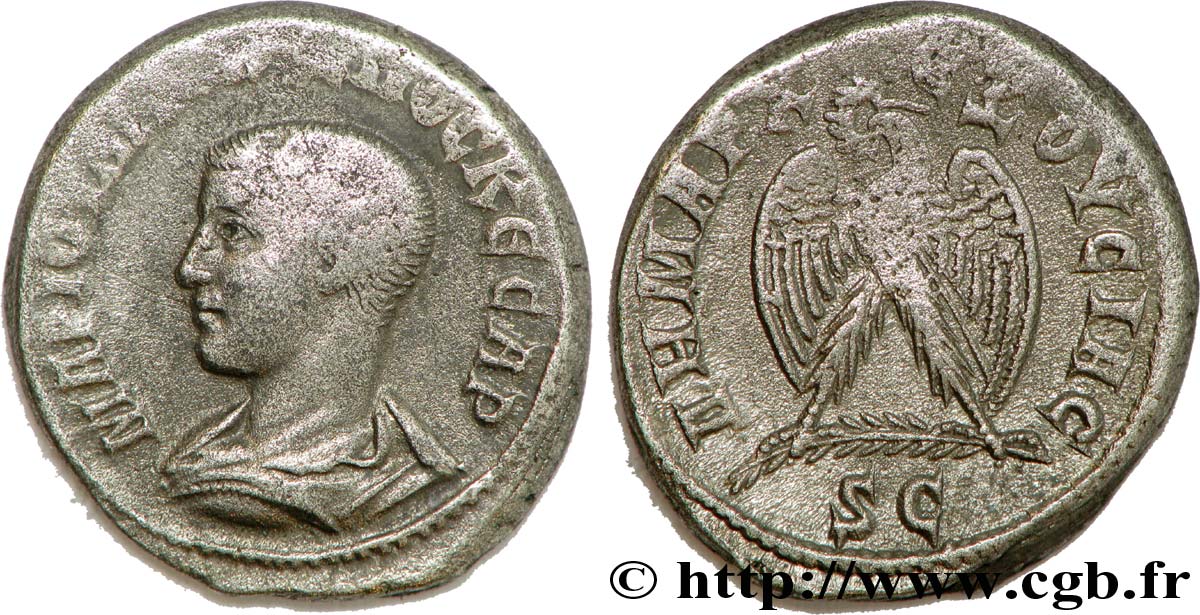
Centrage correct mais gros plats de frappe sur les légendes de la moitié haute du droit et du revers, nettes traces de circulation
N° nelle opere di riferimento :
Diritto
Descrittivo diritto : Buste tête nue drapé et cuirassé à gauche, vu de trois quarts arrière.
Legenda diritto : MAR IOULI FILIPPOS KESAR
Traduzione diritto : (Marcus Julius Philippus césar).
Rovescio
Titolatura rovescio : S|C À L’EXERGUE.
Descrittivo rovescio : Aigle debout à gauche, les ailes déployées, tête à gauche et queue à droite, tenant une couronne feuillée dans son bec, posé sur une palme tige à droite.
Legenda rovescio : DHMARC - EX OUSIAS, (Dhmarcikhs Ex Ousias)
Traduzione rovescio : (Revêtu de la puissance tribunitienne / avec l’accord du Sénat).
Commento
Les frappes de Philippe II, comme celles d’Otacilie Sévère d’ailleurs, portent les titres de Philippe. Elles se distinguent entre elles par deux légendes, différents aigles de revers et un portrait à droite ou à gauche.
Après les frappes de l’atelier de Rome au MONVRB, les émissions de Philippe sont réorganisées à Antioche, le SC conservé et l’aigle est posé sur une palme. Le point essentiel est qu’elle sera présente jusqu’aux frappes du troisième consulat (il n’y a pas de frappes du deuxième consulat) puis reviendra pour toutes les émissions de Trajan Dèce avant de disparaître définitivement avec les frappes de Trébonien Galle et la fin des émissions de tétradrachmes.
La palme est un attribut monétaire récurrent à Antioche, soit dans le champ, soit sous les pattes de l’aigle du revers. A-t-elle toujours la même signification ? Impossible de le savoir. Théoriquement, la palme est le corollaire d’une onction, d’une fête, une décoration religieuse largement utilisée (voir la scène de l’arrivée du Christ à Jérusalem), et probablement, comme l’aigle, un symbole religieux œcuménique, destiné à être compris et accepté par tous les habitants de la région.
Le retour du SC, disparu des revers entre 242 et 244, après avoir remplacé à Antioche le Delta Eta apparu en 215, et jamais vu dans un autre atelier officiel, est confirmé. Si nous suivons la logique développée pour ces émissions, il faut croire que ces frappes de Philippe ont reçu l’assentiment (au moins) et le financement (au plus) du sénat d’Antioche. Une gigantesque rançon ayant été payée aux Perses pour abréger la guerre, le propre frère de Philippe étant gouverneur de Syrie, sa propre famille en étant originaire, on peut au moins penser que le Sénat regagna de son importance de l’époque des Sévères. La réputation de Priscus étant de pressurer la population - au point de susciter l’usurpateur Jotapian - on peut aussi penser que le produit de ces spoliations servit à frapper des tétradrachmes au portrait et donc à la gloire de l’Empereur.
On note que les sigma sont gravés en C.
Dans la base TSP maintenue par Michel Prieur, dix-neuf exemplaires sont maintenant répertoriés pour ce type. Notre exemplaire est le 0335_014.
The coins of Philip II, like those of Otacilia Severus, bear the titles of Philip. They are distinguished from each other by two legends, different reverse eagles and a portrait on the right or left..
After the strikes of the Rome workshop at MONVRB, the issues of Philip were reorganized in Antioch, the SC preserved and the eagle placed on a palm branch. The essential point is that it will be present until the strikes of the third consulate (there are no strikes of the second consulate) then will return for all the issues of Trajan Decius before disappearing definitively with the strikes of Trebonianus Gallus and the end of the issues of tetradrachms.
The palm is a recurring monetary attribute in Antioch, either in the field or under the paws of the eagle on the reverse. Does it still have the same meaning? It's impossible to know.. Theoretically, the palm is the corollary of an anointing, a feast, a widely used religious decoration (see the scene of Christ's arrival in Jerusalem), and probably, like the eagle, an ecumenical religious symbol, intended to be understood and accepted by all the inhabitants of the region..
The return of the SC, which disappeared from the reverses between 242 and 244, after having replaced in Antioch the Delta Eta which appeared in 215, and never seen in another official workshop, is confirmed. If we follow the logic developed for these emissions, we must believe that these strikes of Philip received the assent (at least) and the financing (at most) of the senate of Antioch. A gigantic ransom having been paid to the Persians to shorten the war, Philip's own brother being governor of Syria, his own family being from there, one can at least think that the Senate regained its importance of the time of the Severans. Priscus's reputation for squeezing the population - to the point of giving rise to the usurper Jotapian - we can also think that the product of these spoliations was used to strike tetradrachms with the portrait and therefore to the glory of the Emperor..
Note that the sigmas are engraved in C.
In the TSP database maintained by Michel Prieur, nineteen examples are now listed for this type. Our example is 0335_014
Après les frappes de l’atelier de Rome au MONVRB, les émissions de Philippe sont réorganisées à Antioche, le SC conservé et l’aigle est posé sur une palme. Le point essentiel est qu’elle sera présente jusqu’aux frappes du troisième consulat (il n’y a pas de frappes du deuxième consulat) puis reviendra pour toutes les émissions de Trajan Dèce avant de disparaître définitivement avec les frappes de Trébonien Galle et la fin des émissions de tétradrachmes.
La palme est un attribut monétaire récurrent à Antioche, soit dans le champ, soit sous les pattes de l’aigle du revers. A-t-elle toujours la même signification ? Impossible de le savoir. Théoriquement, la palme est le corollaire d’une onction, d’une fête, une décoration religieuse largement utilisée (voir la scène de l’arrivée du Christ à Jérusalem), et probablement, comme l’aigle, un symbole religieux œcuménique, destiné à être compris et accepté par tous les habitants de la région.
Le retour du SC, disparu des revers entre 242 et 244, après avoir remplacé à Antioche le Delta Eta apparu en 215, et jamais vu dans un autre atelier officiel, est confirmé. Si nous suivons la logique développée pour ces émissions, il faut croire que ces frappes de Philippe ont reçu l’assentiment (au moins) et le financement (au plus) du sénat d’Antioche. Une gigantesque rançon ayant été payée aux Perses pour abréger la guerre, le propre frère de Philippe étant gouverneur de Syrie, sa propre famille en étant originaire, on peut au moins penser que le Sénat regagna de son importance de l’époque des Sévères. La réputation de Priscus étant de pressurer la population - au point de susciter l’usurpateur Jotapian - on peut aussi penser que le produit de ces spoliations servit à frapper des tétradrachmes au portrait et donc à la gloire de l’Empereur.
On note que les sigma sont gravés en C.
Dans la base TSP maintenue par Michel Prieur, dix-neuf exemplaires sont maintenant répertoriés pour ce type. Notre exemplaire est le 0335_014.
The coins of Philip II, like those of Otacilia Severus, bear the titles of Philip. They are distinguished from each other by two legends, different reverse eagles and a portrait on the right or left..
After the strikes of the Rome workshop at MONVRB, the issues of Philip were reorganized in Antioch, the SC preserved and the eagle placed on a palm branch. The essential point is that it will be present until the strikes of the third consulate (there are no strikes of the second consulate) then will return for all the issues of Trajan Decius before disappearing definitively with the strikes of Trebonianus Gallus and the end of the issues of tetradrachms.
The palm is a recurring monetary attribute in Antioch, either in the field or under the paws of the eagle on the reverse. Does it still have the same meaning? It's impossible to know.. Theoretically, the palm is the corollary of an anointing, a feast, a widely used religious decoration (see the scene of Christ's arrival in Jerusalem), and probably, like the eagle, an ecumenical religious symbol, intended to be understood and accepted by all the inhabitants of the region..
The return of the SC, which disappeared from the reverses between 242 and 244, after having replaced in Antioch the Delta Eta which appeared in 215, and never seen in another official workshop, is confirmed. If we follow the logic developed for these emissions, we must believe that these strikes of Philip received the assent (at least) and the financing (at most) of the senate of Antioch. A gigantic ransom having been paid to the Persians to shorten the war, Philip's own brother being governor of Syria, his own family being from there, one can at least think that the Senate regained its importance of the time of the Severans. Priscus's reputation for squeezing the population - to the point of giving rise to the usurper Jotapian - we can also think that the product of these spoliations was used to strike tetradrachms with the portrait and therefore to the glory of the Emperor..
Note that the sigmas are engraved in C.
In the TSP database maintained by Michel Prieur, nineteen examples are now listed for this type. Our example is 0335_014
Cronistoria
FILIPPO II FIGLIO
(05/244-09/249)
Cesare
Figlio di Filippo l'Arabo e di Otacilia Sévéra, Filippo II fu nominato Cesare poco dopo l'ascesa al trono del padre, che gli conferì il titolo di principe della giovinezza..
 Segnalare un errore
 Stampate la pagina
 Condividi mia selezione
 Fai una domanda
 Consegnare / vendere
Articoli correlati
 Descrittivo



Articoli visualizzati di recente

25 Francs type 1941 Spécimen AFRIQUE ÉQUATORIALE FRANÇAISE 1943 A.115bS2 MB
140.00 €
cgbfr.it numismatica


