


lb55 - British Celtic Coins: Art or Imitation? WRIGHT Tim

38.00 €
Quantità
Aggiungi al carrello

Autore : WRIGHT Tim
Editore : Spink and Son
Lingua : Anglais
Caratteristiche : Londres 2023, relié, (16 x 22,2 cm), 144 pages
Peso : 450 g.
Commento
The peoples of pre-Roman Britain remain an enigma. Our perceptions are shaped by two narratives, that of contemporary Roman colonists and more recent Celtic nationalists, who vilify and glorify them in equal measure. The more we learn, the less we know with certainty: should they be described as ‘Celtic peoples’, were they organised into the ‘tribes’ that later formed Roman administrative districts (civitas) and, beyond a few famous names like Cunobelinus (Shakespeare’s Cymbeline), were they led by ‘kings’ or ‘chieftains’?
The coins from this period are no less controversial. Britain was a late adopter of coinage, initially importing coins from the Gallo-Belgic continent and then copying their Macedonian-inspired prototypes. Britain also produced them for longer than the continent, latterly incorporating themes and imagery from Rome. These bookends of external influence have led some to dismiss the coins of pre-Roman Britain (and indeed ‘Celtic’ coins generally) as inferior. The most compelling counter to this is the coins themselves, explored through the theme of Art or Imitation? What we find is extraordinary variety and originality, that makes a powerful case for their collection and stud.
The people of pre-Roman Britain remain an enigma. Our perceptions are shaped by two narratives, that of contemporary Roman colonists and more recent Celtic nationalists, who vilify and glorify them in equal measure. The more we learn, the less we know with certainty: should they be described as 'Celtic peoples', were they organized into the 'tribes' that later formed Roman administrative districts (civitas) and, beyond a few famous names like Cunobelinus (Shakespeare's Cymbeline), were they led by 'kings' or 'chieftains'? The coins from this period are no less controversial. Britain was a late adopter of coinage, initially importing coins from the Gallo-Belgic continent and then copying their Macedonian-inspired prototypes. Britain also produced them for longer than the continent, latterly incorporating themes and imagery from Rome. These bookends of external influence have led some to dismiss the coins of pre-Roman Britain (and indeed 'Celtic' coins generally) as inferior. The most compelling counter to this is the coins themselves, explored through the theme of Art or Imitation? What we find is extraordinary variety and originality, that makes a powerful case for their collection and stud
The coins from this period are no less controversial. Britain was a late adopter of coinage, initially importing coins from the Gallo-Belgic continent and then copying their Macedonian-inspired prototypes. Britain also produced them for longer than the continent, latterly incorporating themes and imagery from Rome. These bookends of external influence have led some to dismiss the coins of pre-Roman Britain (and indeed ‘Celtic’ coins generally) as inferior. The most compelling counter to this is the coins themselves, explored through the theme of Art or Imitation? What we find is extraordinary variety and originality, that makes a powerful case for their collection and stud.
The people of pre-Roman Britain remain an enigma. Our perceptions are shaped by two narratives, that of contemporary Roman colonists and more recent Celtic nationalists, who vilify and glorify them in equal measure. The more we learn, the less we know with certainty: should they be described as 'Celtic peoples', were they organized into the 'tribes' that later formed Roman administrative districts (civitas) and, beyond a few famous names like Cunobelinus (Shakespeare's Cymbeline), were they led by 'kings' or 'chieftains'? The coins from this period are no less controversial. Britain was a late adopter of coinage, initially importing coins from the Gallo-Belgic continent and then copying their Macedonian-inspired prototypes. Britain also produced them for longer than the continent, latterly incorporating themes and imagery from Rome. These bookends of external influence have led some to dismiss the coins of pre-Roman Britain (and indeed 'Celtic' coins generally) as inferior. The most compelling counter to this is the coins themselves, explored through the theme of Art or Imitation? What we find is extraordinary variety and originality, that makes a powerful case for their collection and stud
 Segnalare un errore
 Stampate la pagina
 Condividi mia selezione
 Fai una domanda
Articoli visualizzati di recente
SALUVII Obole scyphate MB
10.00 €
SICILIA - CAMARINA Tetras BB/q.BB
140.00 €
DIOCLEZIANO Aurelianus SPL
76.00 €
ANTONINO PIO Aureus q.SPL
4800.00 €

TRAIANO Cistophore q.SPL/BB
300.00 €
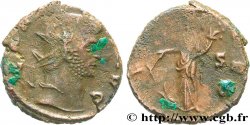
GALLIENO Antoninien BB
6.00 €
cgbfr.it numismatica


