


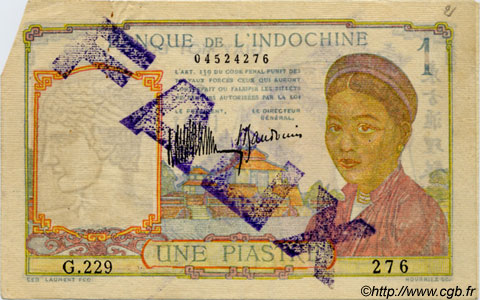
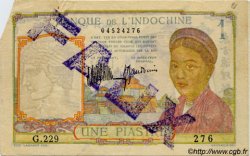
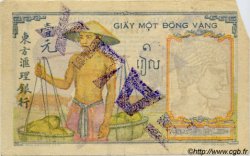
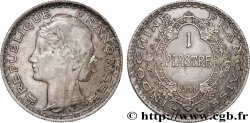
p05_0074 - 1 Piastre INDOCINA FRANCESE 1932 P.052
PAPIER MONNAIE 5 (2005)
Prezzo di inizio : 100.00 €
Valutazione : 200.00 €
Prezzo realizzato : 170.00 €
Numero di offerte : 3
Offerta maxima : 201.00 €
Prezzo di inizio : 100.00 €
Valutazione : 200.00 €
Prezzo realizzato : 170.00 €
Numero di offerte : 3
Offerta maxima : 201.00 €
Valore facciale : 1 Piastre
Data: (1932-1935)
Provincie/Banche Banque de l'Indochine
N° nella opera di riferimento P.052
Altro riferimento KM.142
Alfabeto - Serie : G.229 n°276
Firma : Thion de la Chaume, Baudouin
Commento
Faux certifié par deux tampons à l'encre violette et un coin coupé. Ce faux pour servir est très intéressant car il utilise pour le filigrane la technique des deux feuilles superposées. Chaque coté du billet est imprimé sur un papier très fin avec le filigrane imprimé à l'encre beige sur le verso de l'une des deux parties. Les deux papiers sont ensuite collés et massicotés. Le résultat est assez probant. Cette technique a été utilisée ultérieurement avec une qualité bien supérieure sur les billets de cent livres 1945 du Liban, ce qui a fait perdre ce contrat d'impression à la Banque de France.
Fake certified by two purple ink stamps and a cut corner. This counterfeit is very interesting because it uses the technique of two superimposed sheets for the watermark. Each side of the note is printed on very thin paper with the watermark printed in beige ink on the back of one of the two parts. The two papers are then glued and trimmed. The result is quite convincing. This technique was later used with much higher quality on the 1945 Lebanese hundred-pound banknotes, which caused the Banque de France to lose this printing contract.
Fake certified by two purple ink stamps and a cut corner. This counterfeit is very interesting because it uses the technique of two superimposed sheets for the watermark. Each side of the note is printed on very thin paper with the watermark printed in beige ink on the back of one of the two parts. The two papers are then glued and trimmed. The result is quite convincing. This technique was later used with much higher quality on the 1945 Lebanese hundred-pound banknotes, which caused the Banque de France to lose this printing contract.
Cronistoria
INDOCINA FRANCESE
L'Indocina francese fa parte dell'ex impero coloniale francese, creazione dell'amministrazione coloniale, che riunisce diversi territori: i protettorati del Tonchino e dell'Annam e la colonia della Cocincina, raggruppati dal 1949 nello Stato del Vietnam, il protettorato francese del Laos e il protettorato francese della Cambogia. L'Unione indocinese nasce dall'unione di diversi territori del sud-est asiatico colonizzati o passati sotto il protettorato francese durante il XIX secolo. Nel XX secolo, i vari movimenti indipendentisti vietnamiti guadagnano potere: durante la seconda guerra mondiale, l'indebolimento della metropoli e l'occupazione dell'Indocina da parte dell'Impero del Giappone, pongono fine all'amministrazione coloniale francese.9 marzo 1945 ( nel luglio 1945 a Cocincina in Cina). Il vuoto di potere alla fine della guerra permette al Việt Minh, il movimento indipendentista vietnamita guidato dal Partito Comunista Indocinese, di conquistare il nord del Paese. I tentativi di riconciliare e riformare lo status dell'Indocina fallirono e sfociarono nella guerra dell'Indocina nel 1946.. Di fronte allo stallo politico e militare, la Francia dovette risolversi ad abbandonare l'Indocina, le cui componenti vietnamita, laotiana e cambogiana videro riconosciuta la propria indipendenza dagli Accordi di Ginevra del 1954, che formalizzarono anche la spartizione del Vietnam, come la volevano americani e cinesi.
 Segnalare un errore
 Stampate la pagina
 Condividi mia selezione
 Fai una domanda
 Consegnare / vendere
Articoli correlati

 Descrittivo


Articoli visualizzati di recente
SASANIDES - REGNO DI SASANIDES - SHAPUR II Drachme BB
90.00 €
20 Piastres INDOCINA FRANCESE 1949 P.081s q.FDC
210.00 €

CHARLES IX Teston, 2e type, légende fautive CAOLVS 1566 (MDLXVI) La Rochelle BB
210.00 €
cgbfr.it numismatica


