


v37_1330 - Essai de flan pour la 5 francs Lavrillier, 30 mm, 12 g, lourd n.d. Paris G.265 a note

MONNAIES 37 (2009)
Prezzo di inizio : 150.00 €
Valutazione : 600.00 €
Prezzo realizzato : 281.00 €
Numero di offerte : 4
Offerta maxima : 420.00 €
Prezzo di inizio : 150.00 €
Valutazione : 600.00 €
Prezzo realizzato : 281.00 €
Numero di offerte : 4
Offerta maxima : 420.00 €
Tipo : Essai de flan pour la 5 francs Lavrillier, 30 mm, 12 g, lourd
Data: 18 - (1933)
Data: n.d.
Nome della officina / città: Paris
Metallo : nichel
Diametro : 30,17 mm
Asse di coniazione : 6 h.
Peso : 12,42 g.
Orlo : lisse
Grado di rarità : R2
Commenti sullo stato di conservazione:
Traces de manipulation, minimes accrocs aux surfaces. Joli brillant d’origine
N° nelle opere di riferimento :
Pedigree :
Cet exemplaire provient de la collection Pierre-2
Diritto
Titolatura diritto : REPUBLIQUE FRANÇAISE / 18.
Descrittivo diritto : Tête de Cérès à gauche couronnée d'épis avec un bandeau inscrit CONCOR ; au-dessous signé OUDINÉ.
Rovescio
Titolatura rovescio : MONNAIE DE PARIS - ESSAI DE NICKEL // 12 GR 30 M/M.
Descrittivo rovescio : dans une couronne de laurier.
Commento
On constate sur cet exemplaire un léger bombé sur le revers, facile à voir en faisant jouer l’essai dans la lumière. Bien entendu, l’avers est par comparaison concave.
On peut se demander si ce phénomène ne provient pas d’un foulage du coin de revers, phénomène souvent observé sur, par exemple, les Union et Force, où le centre du revers, particulièrement en relief du fait du bombé, est souvent usé bien avant le reste de la pièce. La question est donc de savoir si la dureté du nickel n’a pas excédé, déjà sur ces essais, la résistance des coins.
On this example, there is a slight bulge on the reverse, which is easy to see by playing the test in the light. Of course, the obverse is concave by comparison. One might wonder if this phenomenon does not come from crushing of the reverse die, a phenomenon often observed on, for example, the Union and Force, where the center of the reverse, particularly in relief due to the bulge, is often worn well before the rest of the coin. The question is therefore whether the hardness of the nickel has not exceeded, already on these tests, the resistance of the dies
On peut se demander si ce phénomène ne provient pas d’un foulage du coin de revers, phénomène souvent observé sur, par exemple, les Union et Force, où le centre du revers, particulièrement en relief du fait du bombé, est souvent usé bien avant le reste de la pièce. La question est donc de savoir si la dureté du nickel n’a pas excédé, déjà sur ces essais, la résistance des coins.
On this example, there is a slight bulge on the reverse, which is easy to see by playing the test in the light. Of course, the obverse is concave by comparison. One might wonder if this phenomenon does not come from crushing of the reverse die, a phenomenon often observed on, for example, the Union and Force, where the center of the reverse, particularly in relief due to the bulge, is often worn well before the rest of the coin. The question is therefore whether the hardness of the nickel has not exceeded, already on these tests, the resistance of the dies
Cronistoria
TERZA REPUBBLICA FRANCESE
(4/09/1870-10/07/1940)
La notizia della capitolazione di Sedan provoca la rivoluzione del 4 settembre 1870 a Parigi. Proclamata all'Hôtel de Ville, la Repubblica è dotata di un governo provvisorio chiamato Governo di Difesa Nazionale. Minacciato a sinistra dall'insurrezione del Comune ea destra dai monarchici, il nuovo regime ebbe un inizio difficile.. Inizialmente capo del potere esecutivo (febbraio 1871), Thiers si occupò di riorganizzare il paese prima di scegliere la sua forma di governo.. Divenne presidente della Repubblica nell'agosto 1871 e, nonostante la sua azione per liberare il territorio, dovette lasciare il suo incarico nel marzo 1873 di fronte all'opposizione monarchica.. Viene poi sostituito da Mac-Mahon favorevole alla restaurazione della monarchia ma questo non viene ripristinato in seguito alla questione della bandiera. La legge del settennato fu poi varata nel novembre 1873 e poi, nel 1875, furono approvate le leggi fondamentali che servirono da Costituzione della Terza Repubblica.. Sistema parlamentare, si caratterizza in particolare per la netta preponderanza del potere legislativo su quello esecutivo. Anticlericale, la Terza Repubblica rende la scuola gratuita, laica e obbligatoria ma continua la politica coloniale per le sue ambizioni economiche, strategiche e morali. La separazione tra Chiesa e Stato fu approvata nel 1905.. L'idea di vendetta sulla Germania e il nazionalismo significativo sono al centro della crisi boulangista, dello scandalo di Panama o dell'affare Dreyfus degli anni 1886-1899, mentre la politica estera è molto attiva, in particolare in Marocco e che si sviluppa la corsa agli armamenti. La prima guerra mondiale fu costosa per la Francia, che si riprese solo dal 1920 o addirittura dal 1928 per la moneta con il franco "Poincaré".. La crisi del 1929 si fa sentire solo dal 1932 ma dura fino al 1939, periodo durante il quale l'instabilità ministeriale è molto importante. Vacillando nel 1934, la Terza Repubblica trovò un nuovo cemento unitario con l'antifascismo che permise al Fronte Popolare di salire al potere nel 1936.. Ma, paralizzata contro la Germania, la Francia fu poi impantanata in una "guerra fasulla" e poi subì una delle più grandi sconfitte della sua storia nel giugno 1940.. Riunite nell'Assemblea nazionale di Vichy il 10 luglio 1940, le Camere, benché elette nel 1936, votarono pieni poteri a Pétain in una sorta di suicidio collettivo con 569 voti favorevoli, 80 contrari e 18 astenuti..
 Segnalare un errore
 Stampate la pagina
 Condividi mia selezione
 Fai una domanda
 Consegnare / vendere
Articoli correlati

 Descrittivo

Articoli visualizzati di recente
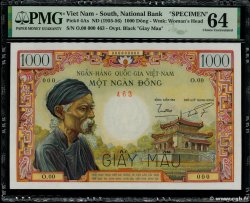
1000 Dong Spécimen VIETNAM DEL SUD 1955 P.04As q.FDC
8000.00 €

TIBERIO As q.BB
100.00 €
LUIGI FILIPPO I Empreinte en cire de Catherine de Médicis BB
25.00 €

AMOUR ET MARIAGE Médaille de mariage SPL
40.00 €
MASSIMIANO ERCOLE Aurelianus MS/SPL
200.00 €

MASSIMIANO ERCOLE Aurelianus SPL
1500.00 €
cgbfr.it numismatica


